

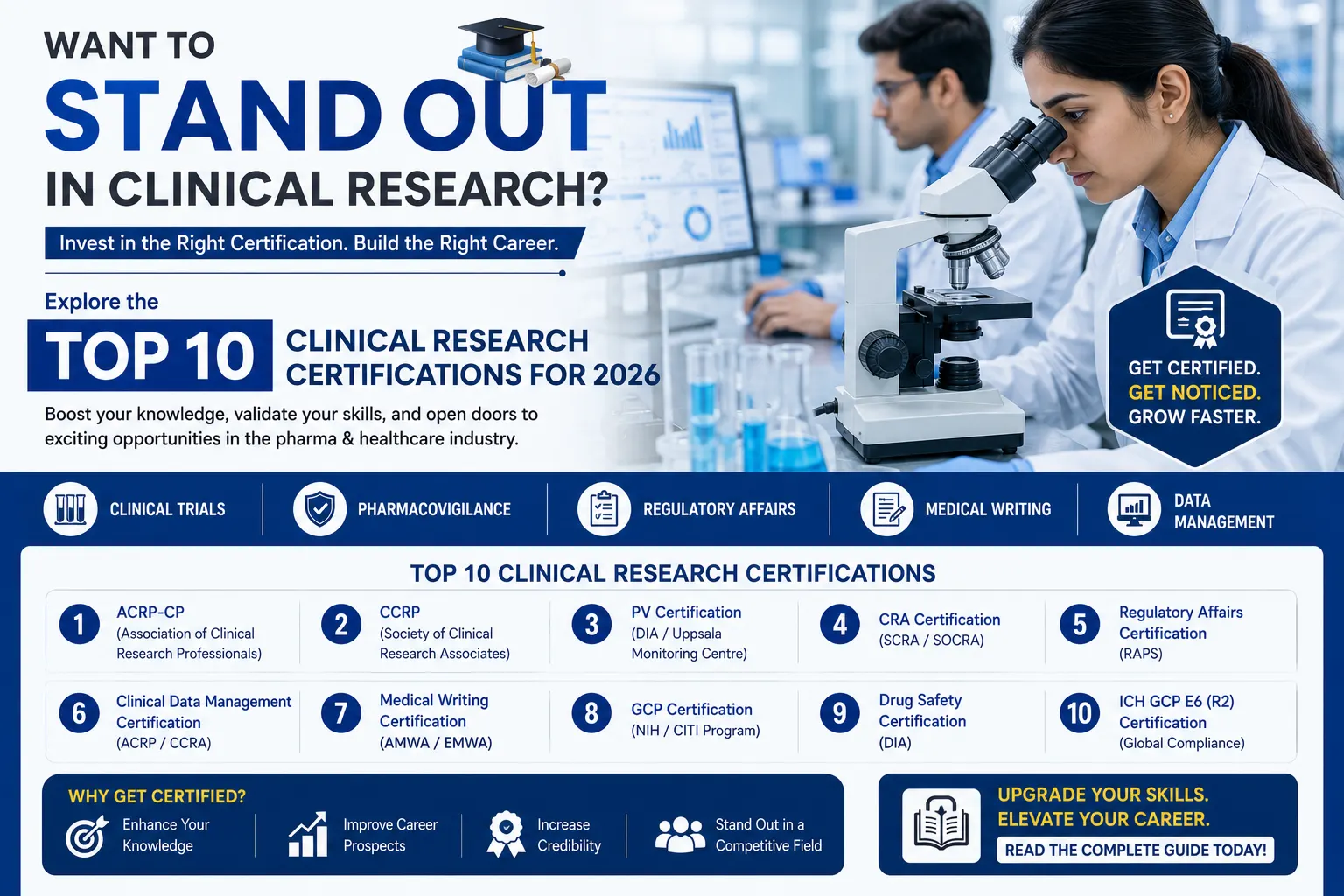
The pharmaceutical and biotechnology industries continue to evolve with increasing emphasis on clinical trial quality, regulatory compliance, and patient safety. Employers often look for candidates who combine formal education with practical knowledge of Good Clinical Practice (GCP), clinical trial operations, and regulatory standards. Recent industry hiring trends also show continued demand for professionals with specialized skills in clinical research, pharmacovigilance, regulatory affairs, and data management.
While certifications do not guarantee a job or salary increase, they can demonstrate commitment to professional development and help strengthen your resume for certain roles.
1. ACRP Certified Clinical Research Associate (CCRA®)
Offered by the Association of Clinical Research Professionals (ACRP), this certification is designed for experienced Clinical Research Associates (CRAs).
Best For
- Clinical Research Associates
- Clinical Operations Professionals
Skills Covered
- Clinical monitoring
- GCP compliance
- Trial documentation
- Site management
2. SOCRA Certified Clinical Research Professional (CCRP®)
The Society of Clinical Research Associates (SOCRA) offers the CCRP credential for professionals involved in clinical research.
Best For
- Clinical coordinators
- Research nurses
- Clinical operations staff
3. Good Clinical Practice (GCP) Certification
GCP training is widely recognized across the clinical research industry and provides foundational knowledge of ethical and scientific quality standards.
Best For
- Students
- Fresh graduates
- Entry-level professionals
4. Regulatory Affairs Certification (RAC)
Professionals interested in global regulatory compliance and product approvals often pursue the RAC credential.
Best For
- Regulatory Affairs Specialists
- Medical Device Professionals
- Pharmaceutical Regulatory Teams
5. Pharmacovigilance Certification
Drug safety and pharmacovigilance training helps professionals understand adverse event reporting, risk management, and regulatory requirements.
Best For
- Drug Safety Associates
- Pharmacists
- Medical Review Teams
6. Clinical Data Management Certification
Ideal for professionals managing clinical databases, electronic data capture systems, and trial data quality.
7. Medical Writing Certification
Medical writing skills are valuable for preparing clinical study reports, protocols, regulatory documents, and scientific publications.
8. Project Management Professional (PMP®)
Clinical trials require strong project management, making PMP valuable for experienced professionals leading cross-functional teams.
9. SAS Programming for Clinical Research
SAS remains an important programming language in many clinical research and biostatistics environments.
10. AI & Healthcare Analytics Training
Artificial intelligence and healthcare analytics are becoming increasingly important in clinical trial optimization, medical data analysis, and digital health innovation. Organizations continue investing in AI-supported research and healthcare technology.
Official Resources
- ACRP: https://acrpnet.org
- SOCRA: https://www.socra.org
- ICH Guidelines: https://www.ich.org
Which Certification Should You Choose?
The right certification depends on your career goals:
- Freshers: GCP, introductory clinical research training
- CRA Professionals: CCRA®, CCRP®
- Drug Safety: Pharmacovigilance certification
- Regulatory Careers: RAC
- Data Careers: SAS, Clinical Data Management
- Leadership Roles: PMP®
Final Thoughts
Professional certifications can complement your education and work experience by validating specialized knowledge and helping you stay current with industry standards. As the pharmaceutical and biotech sectors continue to grow, investing in relevant skills may improve your long-term career prospects, especially when combined with practical experience and continuous learning.
Link this article to:
- Accuprec Research Labs Hiring Freshers 2026 | QC & Microbiology Jobs in India
- Lyfius Pharma Walk-In Drive 2026 | Fermentation Production Jobs (Aurobindo)
- MJ Biopharm R&D Jobs 2026 | Upstream Executive Pune Hiring
- Ami Lifesciences Walk-In Interview 2026 – Pharma Jobs in Gujarat | Production, QC & Engineering Roles
- Parexel Internship & Graduate Programs 2026: Eligibility, APEX CRA Program, Application Process & Career Guide
- How to Get Hired at Parexel in 2026: Resume, Interview Questions & Career Guide