

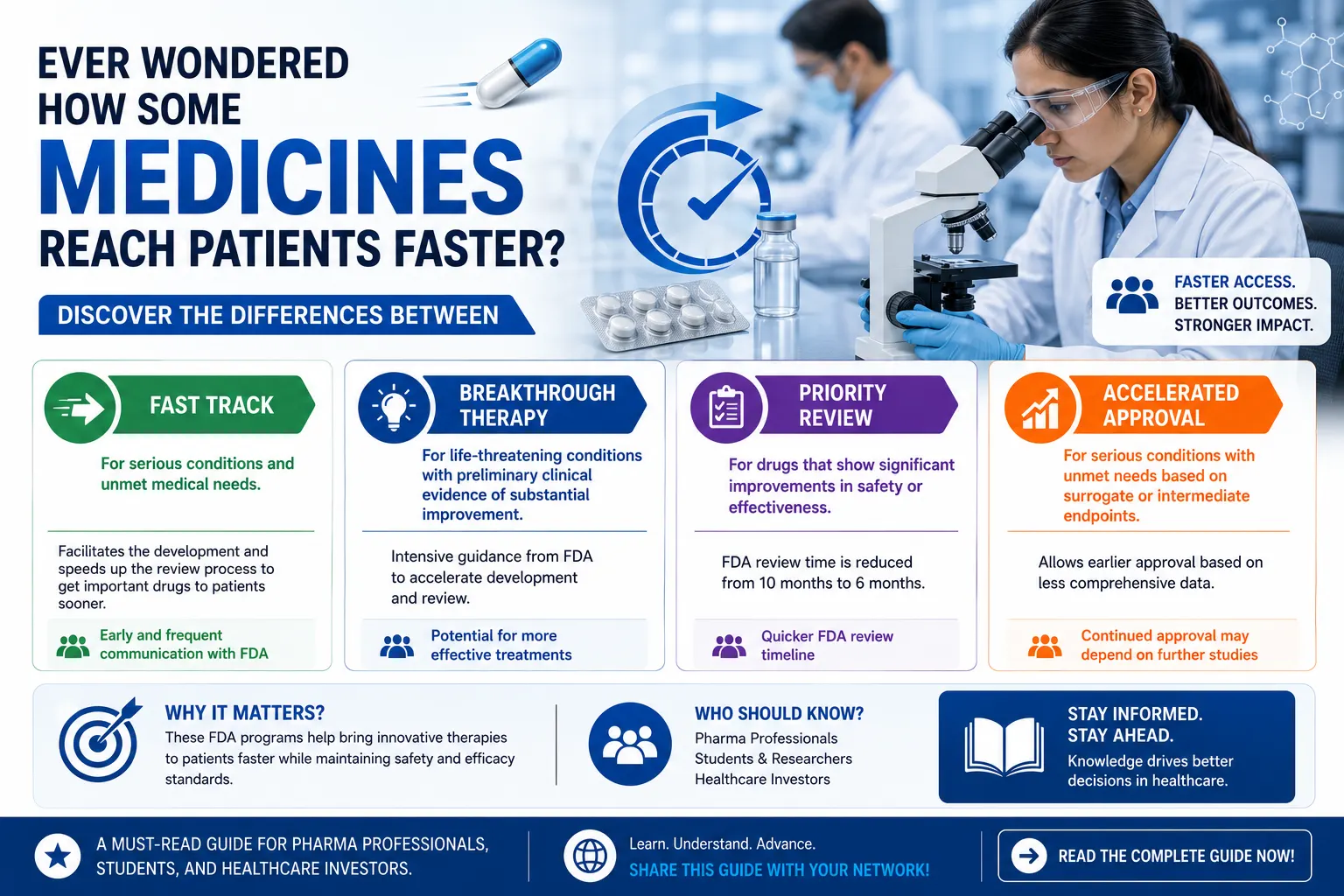
Every year, dozens of innovative medicines receive special FDA designations that can speed parts of the development and review process for therapies addressing serious conditions or unmet medical needs.
Professionals working in pharmaceutical companies, biotechnology firms, CROs, regulatory affairs, clinical research, healthcare investing, and medical journalism frequently search for clear explanations of these pathways.
This article explains the four major FDA programs and how they differ.
1. Fast Track Designation
Fast Track is intended to facilitate the development and expedite the review of drugs that treat serious conditions and fill an unmet medical need.
Key Features
- More frequent communication with the FDA
- Rolling Review may be available if criteria are met
- Potential eligibility for Priority Review and Accelerated Approval when requirements are satisfied
2. Breakthrough Therapy Designation
Breakthrough Therapy designation is available for certain drugs intended to treat serious conditions when preliminary clinical evidence suggests they may demonstrate substantial improvement over available therapies on clinically significant endpoints.
Benefits
- Intensive FDA guidance
- Organizational commitment involving senior FDA staff
- Efficient development planning
3. Priority Review
Priority Review shortens the FDA’s target review timeline for certain marketing applications compared with Standard Review. It is a review designation and does not change the evidence standards required for approval.
4. Accelerated Approval
Accelerated Approval allows approval of certain drugs for serious conditions based on surrogate or intermediate clinical endpoints that are reasonably likely to predict clinical benefit, with required post-marketing studies to verify benefit where applicable.
Official Sources
- FDA Fast Track Program: https://www.fda.gov/patients/fast-track-breakthrough-therapy-accelerated-approval-priority-review/fast-track
- FDA Expedited Programs Overview: https://www.fda.gov
- ICH Guidelines: https://www.ich.org
Comparison Table
| Pathway | Main Purpose | Applies To |
|---|---|---|
| Fast Track | Facilitate development and review | Serious conditions with unmet medical need |
| Breakthrough Therapy | Intensive development support | Preliminary evidence of substantial improvement |
| Priority Review | Shorter FDA review goal | Certain marketing applications meeting criteria |
| Accelerated Approval | Earlier approval using qualifying endpoints | Serious conditions under specific regulatory requirements |
Why Pharma Companies Care
These programs may help companies:
- Bring important therapies to patients more efficiently when criteria are met
- Improve collaboration with regulators
- Optimize development planning
- Support innovation in serious diseases
Each program has distinct eligibility requirements and does not guarantee approval.
Final Thoughts
Understanding FDA regulatory pathways is valuable for professionals in regulatory affairs, clinical research, pharmacovigilance, biotechnology, and healthcare investing. Knowing the differences between Fast Track, Breakthrough Therapy, Priority Review, and Accelerated Approval can help you better interpret pharmaceutical news and drug development milestones.
Link this article to:
- Accuprec Research Labs Hiring Freshers 2026 | QC & Microbiology Jobs in India
- Lyfius Pharma Walk-In Drive 2026 | Fermentation Production Jobs (Aurobindo)
- MJ Biopharm R&D Jobs 2026 | Upstream Executive Pune Hiring
- Ami Lifesciences Walk-In Interview 2026 – Pharma Jobs in Gujarat | Production, QC & Engineering Roles
- Parexel Internship & Graduate Programs 2026: Eligibility, APEX CRA Program, Application Process & Career Guide
- How to Get Hired at Parexel in 2026: Resume, Interview Questions & Career Guide