

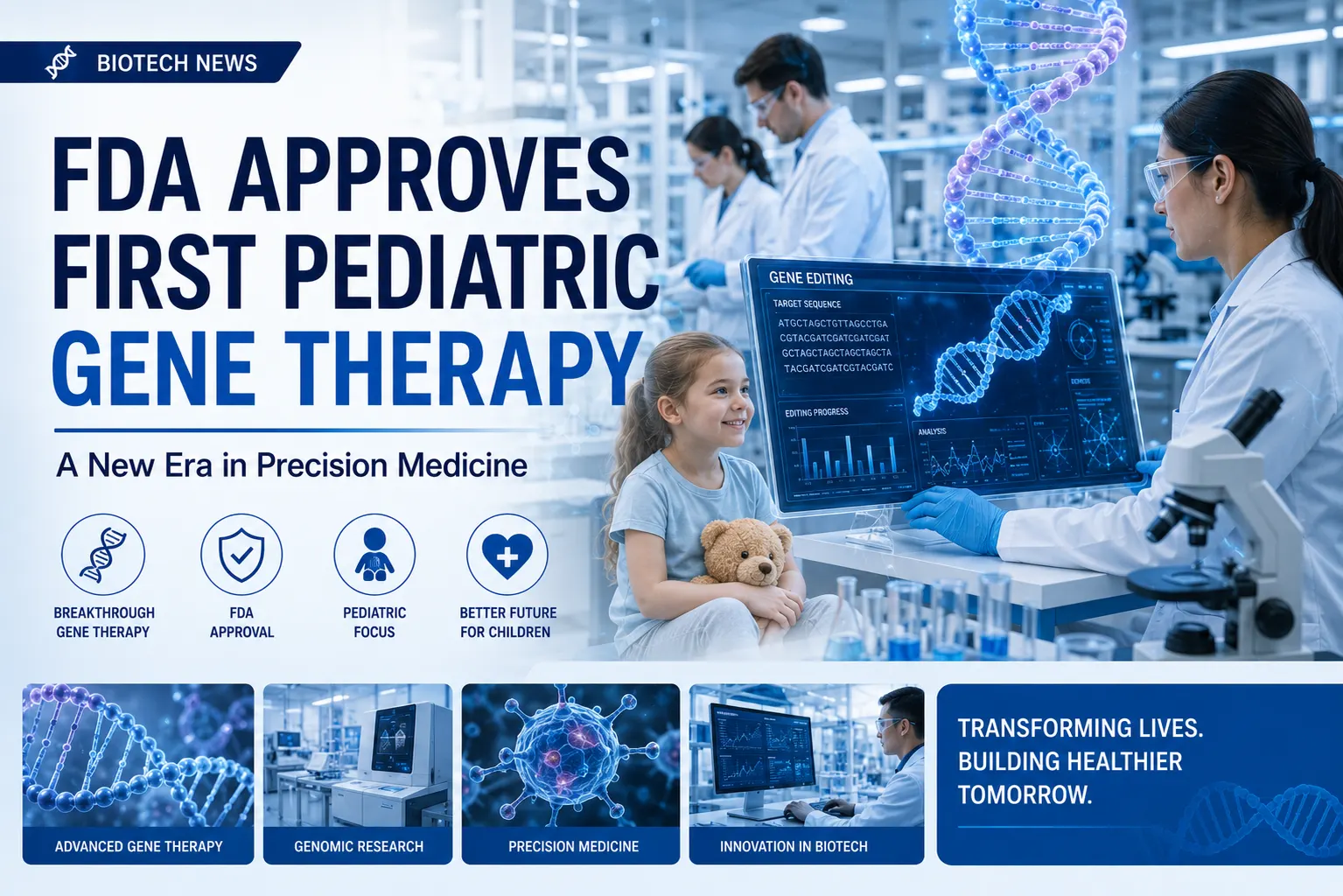
The U.S. Food and Drug Administration (FDA) has approved the first gene therapy for young children with sickle cell disease, marking a significant milestone in the advancement of precision medicine. The approval expands access to innovative treatment options for eligible pediatric patients and reflects the rapid progress being made in cell and gene therapy research.
Gene therapy has become one of the fastest-growing areas of biotechnology. Instead of only managing symptoms, researchers are developing treatments designed to address the underlying biological causes of certain inherited diseases.
Why This Approval Matters
Sickle cell disease is an inherited blood disorder that can lead to painful episodes, anemia, infections, and other serious complications. Expanding gene therapy options to younger eligible patients represents an important step in pediatric care.
The FDA’s decision highlights the growing role of advanced genetic technologies in treating rare diseases while maintaining rigorous standards for safety and effectiveness.
What Is Gene Therapy?
Gene therapy is a medical approach that modifies or replaces genetic material to help treat or prevent disease. Depending on the therapy, this may involve:
- Correcting a disease-causing gene
- Introducing a functional copy of a gene
- Modifying cells outside the body before returning them to the patient
- Using viral vectors to deliver genetic material
Every approved gene therapy undergoes extensive clinical testing and FDA review before reaching patients.
The Growing Gene Therapy Market
Gene therapy is one of the highest-growth sectors in biotechnology.
Industry investments continue to increase in areas such as:
- Rare diseases
- Blood disorders
- Cancer therapies
- Neurological diseases
- Eye disorders
- Genetic disorders
Many global pharmaceutical and biotechnology companies are expanding research programs focused on cell and gene therapies.
Impact on the Pharmaceutical Industry
The approval is expected to strengthen investment across:
- Biotechnology research
- Cell therapy manufacturing
- Gene editing technologies
- Clinical development
- Precision medicine
- Advanced biologics manufacturing
As innovation continues, companies are also investing heavily in manufacturing capacity and specialized quality systems.
Official Sources
- FDA Newsroom: https://www.fda.gov/news-events/fda-newsroom
- National Institutes of Health (NIH): https://www.nih.gov
- National Heart, Lung, and Blood Institute (NHLBI): https://www.nhlbi.nih.gov
Career Opportunities
Growth in gene therapy is creating demand for professionals in:
- Cell & Gene Therapy Manufacturing
- Molecular Biology
- Clinical Research
- Regulatory Affairs
- Quality Assurance
- Quality Control
- Bioinformatics
- Biostatistics
- Medical Writing
- Pharmacovigilance
Professionals with expertise in biologics, GMP, and advanced therapies are increasingly sought after.
Future Outlook
Gene therapy is expected to remain one of the fastest-growing segments of the life sciences industry. Continued research may expand treatment options for additional inherited disorders, while ongoing regulatory oversight will remain essential to ensure patient safety.
Conclusion
The FDA’s approval of the first gene therapy for young children with sickle cell disease marks another important milestone in modern medicine. It demonstrates how advances in biotechnology and precision medicine are creating new treatment possibilities while reinforcing the importance of scientific research, clinical evidence, and regulatory review.
Read More: BioClinAarc Pharmacovigilance Jobs 2026: PV, Medical Review & PSUR Openings
FAQs
What is gene therapy?
Gene therapy is a treatment approach that modifies genetic material to help treat certain diseases.
Why is this FDA approval significant?
It expands access to a gene therapy option for eligible young children with sickle cell disease, representing an important advance in pediatric precision medicine.
Is gene therapy becoming more common?
The number of approved cell and gene therapies has been increasing, supported by advances in biotechnology and clinical research.
Link this article to:
- Shiksha Seva Foundation Hiring 2026 | Program Executive Jobs in Borivali (Freshers Apply)
- Granules India Walk-In Interview 2026: Apprenticeship Jobs for Freshers in Hyderabad
- Metrochem Walk-In Drive 2026: 350+ Openings for Freshers & Experienced in API Manufacturing
- Microbiologist Jobs 2026 | Agri Search Hiring for R&D Roles (Apply Before 15 July)
- Elanco Hiring Pharmacovigilance Analyst in Bangalore 2026 | Freshers & Vets Apply (0–2 Years)