

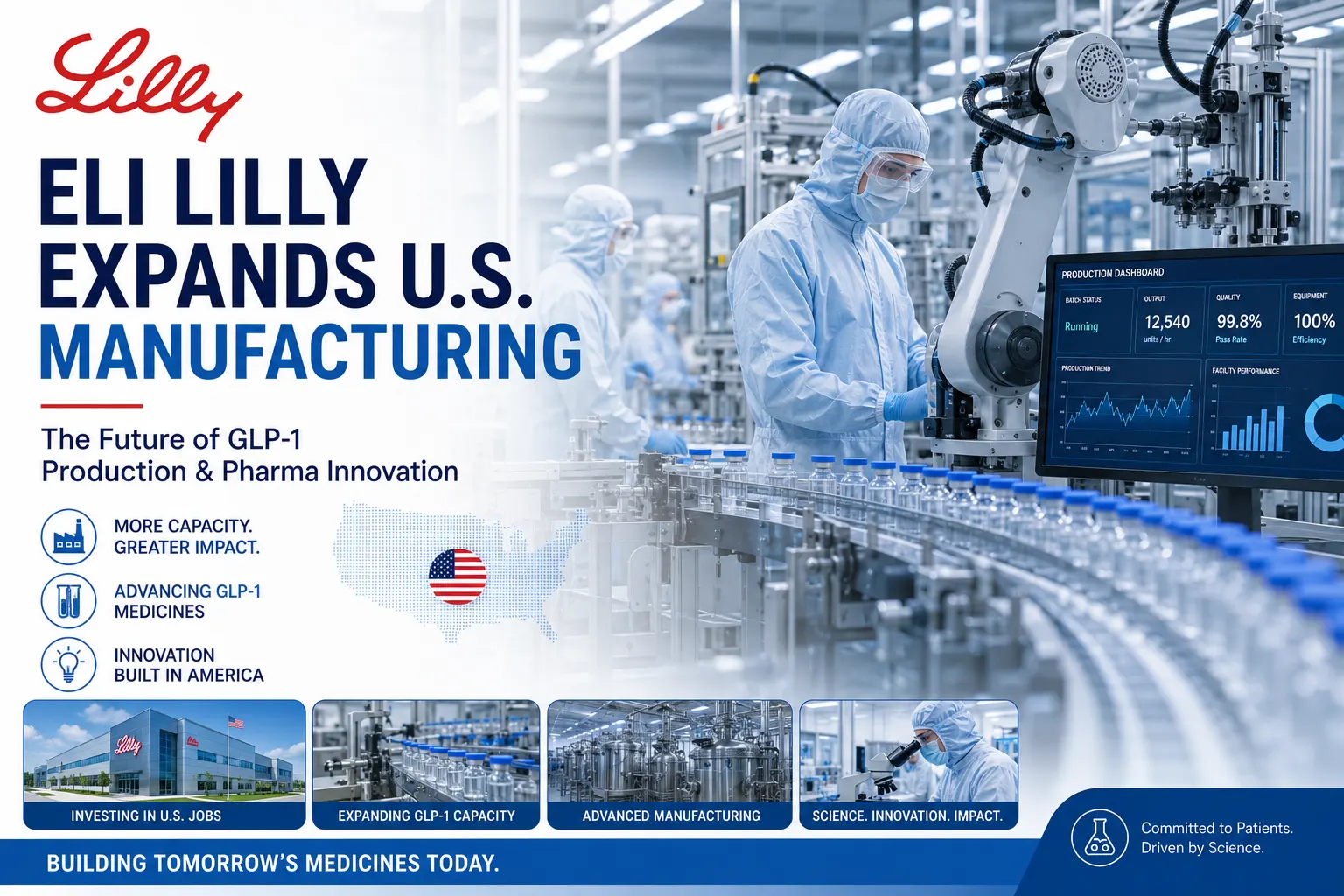
The demand for GLP-1 medicines used in diabetes care and, where approved, chronic weight management has grown rapidly in recent years. To support this demand, Eli Lilly has continued investing billions of dollars in expanding its U.S. manufacturing network.
The company’s long-term manufacturing strategy includes increasing production capacity, strengthening supply chains, and supporting future pharmaceutical innovation. These investments are expected to help meet growing global demand while creating additional opportunities across the life sciences industry.
Why This Expansion Matters
Modern pharmaceutical manufacturing requires highly specialized facilities capable of producing complex medicines under strict quality standards.
Expanding manufacturing capacity may help:
- Increase long-term production capabilities.
- Improve supply chain resilience.
- Support future product launches.
- Create manufacturing and engineering jobs.
- Strengthen domestic pharmaceutical production.
The expansion also reflects the broader trend of increasing investment in advanced pharmaceutical manufacturing across the United States.
The Growing GLP-1 Market
GLP-1 medicines have become one of the fastest-growing therapeutic categories worldwide.
Key market drivers include:
- Rising prevalence of type 2 diabetes.
- Growing demand for obesity treatments.
- Continued pharmaceutical innovation.
- Increased manufacturing investment.
- Expansion of injectable medicine technologies.
Industry analysts expect competition in this market to remain strong as companies continue developing new therapies and production capabilities.
Impact on the Pharmaceutical Industry
Large-scale manufacturing investments often benefit multiple sectors, including:
- Active pharmaceutical ingredient (API) production.
- Injectable medicine manufacturing.
- Packaging and distribution.
- Cold-chain logistics.
- Quality assurance and regulatory compliance.
- Automation and digital manufacturing.
These developments also encourage suppliers, equipment manufacturers, and contract organizations to expand their capabilities.
Career Opportunities
Growing pharmaceutical manufacturing capacity continues to create opportunities for professionals in:
- Production Operations
- Process Engineering
- Validation
- Quality Assurance (QA)
- Quality Control (QC)
- Regulatory Affairs
- Automation Engineering
- Supply Chain Management
- Maintenance Engineering
- Manufacturing Science
Professionals with GMP experience, biologics manufacturing knowledge, and expertise in sterile operations remain highly sought after.
Official Sources
- Eli Lilly Newsroom: https://investor.lilly.com/news-releases
- U.S. Food and Drug Administration (FDA): https://www.fda.gov
- Reuters Healthcare & Pharmaceuticals: https://www.reuters.com/business/healthcare-pharmaceuticals/
Future Outlook
The pharmaceutical industry is expected to continue investing in manufacturing modernization, digital technologies, and advanced production systems.
As demand for innovative medicines grows, companies are likely to prioritize resilient supply chains, scalable manufacturing, and sustainable production practices.
Conclusion
Eli Lilly’s continued investment in U.S. manufacturing reflects the pharmaceutical industry’s focus on expanding production capacity while supporting future healthcare innovation. Although market demand and regulatory requirements will continue to shape the industry, manufacturing expansion remains a key driver of long-term growth for the pharmaceutical sector.
FAQs
Why is Eli Lilly expanding manufacturing?
The company is investing in additional production capacity to support current and future medicines, including growing demand for GLP-1 therapies.
Does manufacturing expansion create jobs?
Large manufacturing projects typically increase demand for engineers, quality professionals, manufacturing specialists, supply chain experts, and regulatory personnel.
Why are GLP-1 medicines important?
GLP-1 therapies are widely used in the treatment of type 2 diabetes and, for certain approved products, chronic weight management.
Link this article to:
- Shiksha Seva Foundation Hiring 2026 | Program Executive Jobs in Borivali (Freshers Apply)
- Granules India Walk-In Interview 2026: Apprenticeship Jobs for Freshers in Hyderabad
- Metrochem Walk-In Drive 2026: 350+ Openings for Freshers & Experienced in API Manufacturing
- Microbiologist Jobs 2026 | Agri Search Hiring for R&D Roles (Apply Before 15 July)
- Elanco Hiring Pharmacovigilance Analyst in Bangalore 2026 | Freshers & Vets Apply (0–2 Years)