

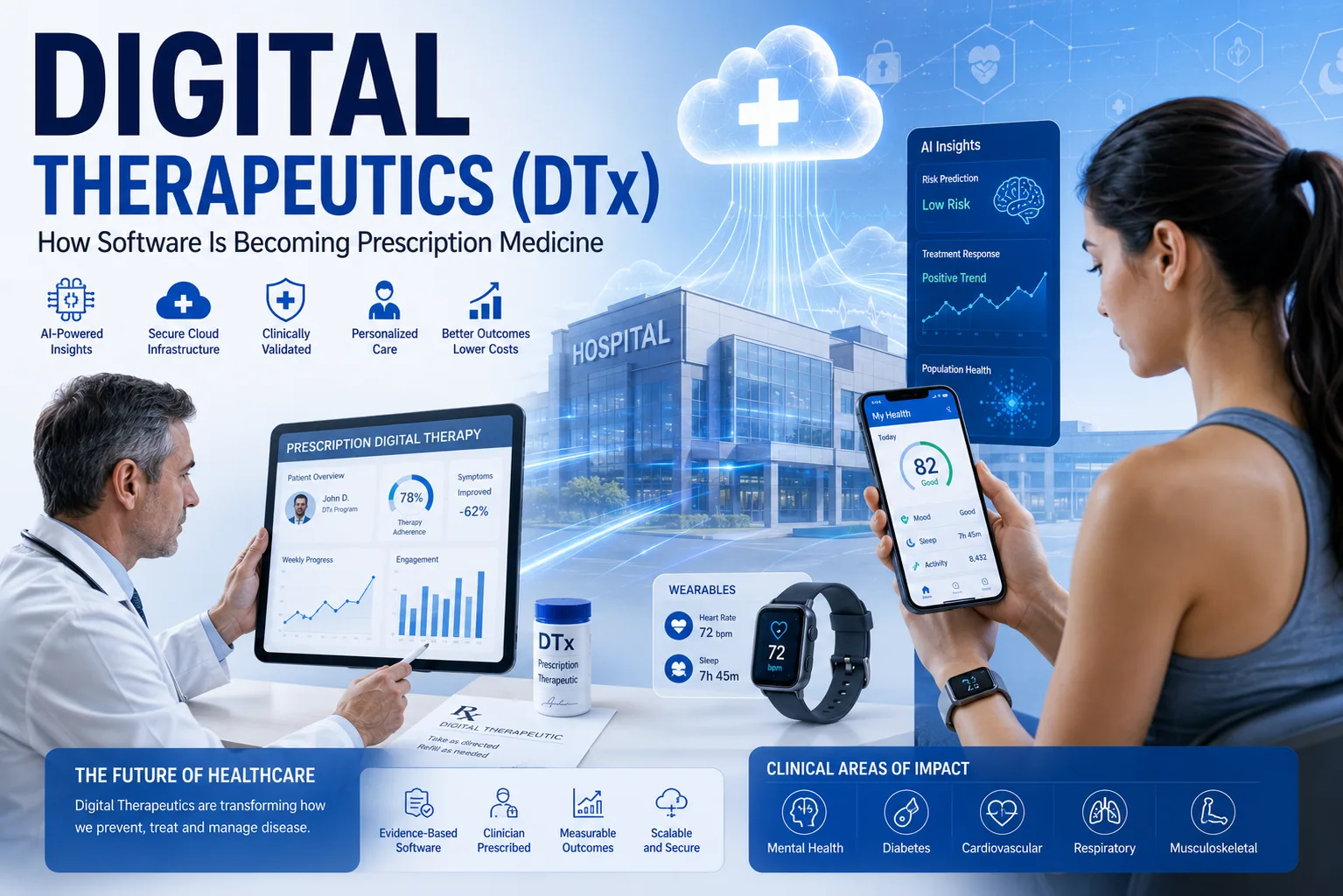
Healthcare is entering a new digital era where software is becoming an important part of patient care. While medicines, medical devices, and surgeries remain the foundation of modern healthcare, a rapidly growing field known as Digital Therapeutics (DTx) is changing how certain diseases are managed.
Unlike general wellness or fitness apps, Digital Therapeutics are evidence-based software products designed to help prevent, manage, or treat specific medical conditions. Many are developed through clinical research and, where required, undergo regulatory review before being used in patient care.
As healthcare systems continue embracing digital transformation, Digital Therapeutics are expected to become one of the fastest-growing segments of the global health technology market.
What Are Digital Therapeutics?
Digital Therapeutics (DTx) are software-based medical interventions intended to help manage or treat specific health conditions. Depending on the product and the regulatory framework in a given country, some DTx products may be prescribed by healthcare professionals or integrated into broader treatment plans.
Unlike fitness trackers or lifestyle apps, Digital Therapeutics are developed using scientific evidence and are often evaluated through clinical studies to demonstrate their safety and effectiveness.
DTx products may be used alongside traditional treatments—not necessarily as replacements—and should always be used according to healthcare provider guidance.
How Digital Therapeutics Work
Digital Therapeutics use advanced technologies to deliver personalized care through software platforms.
Common features include:
- Personalized treatment programs
- AI-assisted health recommendations
- Behavioral therapy modules
- Medication reminders
- Symptom tracking
- Progress monitoring
- Secure communication with healthcare teams
- Data analytics for care management
Many solutions are accessible through smartphones, tablets, or web platforms, allowing patients to engage with treatment from home while remaining connected to their healthcare providers.
Conditions Where DTx May Be Used
Depending on regulatory approvals and available clinical evidence, Digital Therapeutics are being explored or used for conditions such as:
- Type 2 Diabetes
- Obesity
- Hypertension
- Insomnia
- Chronic Pain
- Depression
- Anxiety Disorders
- Asthma
- COPD
- Substance Use Disorders
Each product is designed for specific indications, and patients should only use them under appropriate medical guidance.
Why the Pharmaceutical Industry Is Investing in DTx
Leading pharmaceutical and healthcare companies increasingly recognize that software can complement medicines by improving patient engagement and treatment adherence.
Digital Therapeutics may help:
- Enhance patient education
- Support long-term disease management
- Improve medication adherence
- Collect real-world health data
- Personalize treatment experiences
- Strengthen communication between patients and healthcare providers
As a result, many pharmaceutical companies are collaborating with digital health startups and technology firms to develop integrated healthcare solutions.
AI and Digital Therapeutics
Artificial intelligence is playing an expanding role in Digital Therapeutics.
AI technologies may assist by:
- Identifying health trends
- Personalizing therapy recommendations
- Monitoring patient progress
- Detecting potential health risks
- Supporting clinical decision-making
However, AI recommendations are intended to support—not replace—qualified healthcare professionals.
Benefits for Patients
Digital Therapeutics offer several potential advantages:
Personalized Care
Software can adapt programs based on individual patient needs and progress.
Improved Accessibility
Many DTx solutions allow patients to receive ongoing support from home, reducing the need for frequent in-person visits in appropriate situations.
Better Engagement
Interactive features may encourage patients to remain engaged with long-term treatment plans.
Continuous Monitoring
Healthcare providers may receive data that helps them understand patient progress between appointments, depending on the product and care model.
Challenges Facing Digital Therapeutics
Despite significant potential, Digital Therapeutics also face important challenges.
Healthcare organizations and developers must address:
- Data privacy
- Cybersecurity
- Clinical validation
- Regulatory compliance
- Patient adoption
- Reimbursement policies
- Integration with electronic health records
Building trust through rigorous scientific evidence and strong privacy protections remains essential.
Career Opportunities in Digital Therapeutics
The rapid growth of DTx is creating opportunities across healthcare and technology.
High-demand roles include:
- Digital Health Product Manager
- Clinical Research Associate
- Regulatory Affairs Specialist
- Software Engineer
- AI Engineer
- Data Scientist
- UX/UI Designer for Healthcare
- Medical Writer
- Pharmacovigilance Specialist
- Healthcare Data Analyst
- Cybersecurity Specialist
- Clinical Informatics Professional
Professionals with expertise in both healthcare and technology are increasingly valuable in this evolving field.
Official Sources
- U.S. Food and Drug Administration (FDA) – Digital Health Center of Excellence: https://www.fda.gov/medical-devices/digital-health-center-excellence
- Digital Therapeutics Alliance: https://dtxalliance.org
- National Institutes of Health (NIH): https://www.nih.gov
- Centers for Medicare & Medicaid Services (CMS): https://www.cms.gov
The Future of Prescription Digital Medicine
Experts expect Digital Therapeutics to become more integrated into healthcare systems over the coming years.
Future developments may include:
- AI-driven personalized treatment pathways
- Integration with wearable medical devices
- Remote patient monitoring
- Digital biomarkers
- Predictive health analytics
- Expanded reimbursement models
- Greater collaboration between pharmaceutical and technology companies
While traditional medicines will continue to play a vital role, software-based interventions may become an increasingly important complement to patient care.
Why This Matters for the Pharmaceutical Industry
Digital Therapeutics represent more than a technological innovation—they reflect a broader shift toward connected, data-driven healthcare.
For pharmaceutical companies, DTx may:
- Improve patient support programs
- Enhance treatment adherence
- Generate valuable real-world evidence
- Create new partnerships with technology companies
- Expand digital healthcare services
As healthcare becomes increasingly digital, companies that combine medicines with evidence-based software solutions may be better positioned to meet evolving patient needs.
Conclusion
Digital Therapeutics are reshaping the future of healthcare by combining clinical science with advanced software technologies. Although they are not replacements for all traditional treatments, they offer new opportunities to support disease management, improve patient engagement, and complement existing medical care.
As investment in digital health, artificial intelligence, and connected care continues to grow, Digital Therapeutics are likely to become an increasingly important part of modern medicine. For patients, healthcare providers, and the pharmaceutical industry alike, this is a field worth watching in the years ahead.
Frequently Asked Questions
What are Digital Therapeutics (DTx)?
Digital Therapeutics are evidence-based software products designed to help prevent, manage, or treat specific medical conditions.
Are Digital Therapeutics the same as fitness apps?
No. Unlike general wellness apps, DTx products are developed using clinical evidence and may be subject to regulatory requirements depending on their intended use.
Can Digital Therapeutics replace prescription medicines?
Not necessarily. Many DTx products are intended to complement existing treatments. Treatment decisions should always be made by qualified healthcare professionals.
Why are pharmaceutical companies interested in DTx?
Digital Therapeutics can support patient engagement, improve treatment adherence, and provide valuable real-world health data while complementing traditional therapies
Link this article to:
- Rivpra Formulation Pharma Jobs 2026: QA, QC, F&D & Production Hiring in Haridwar
- FDA Approves Historic Gene Therapy for Children—A New Milestone in Modern Medicine
- Gland Pharma Walk-In Interview 2026: Production Chemist Jobs in Hyderabad
- IQVIA Analyst Job 2026: Life Sciences Consulting Role in Pune
- Medtronic Co-op/Apprentice Jobs 2026: Entry-Level Non-Tech Role in Chennai