
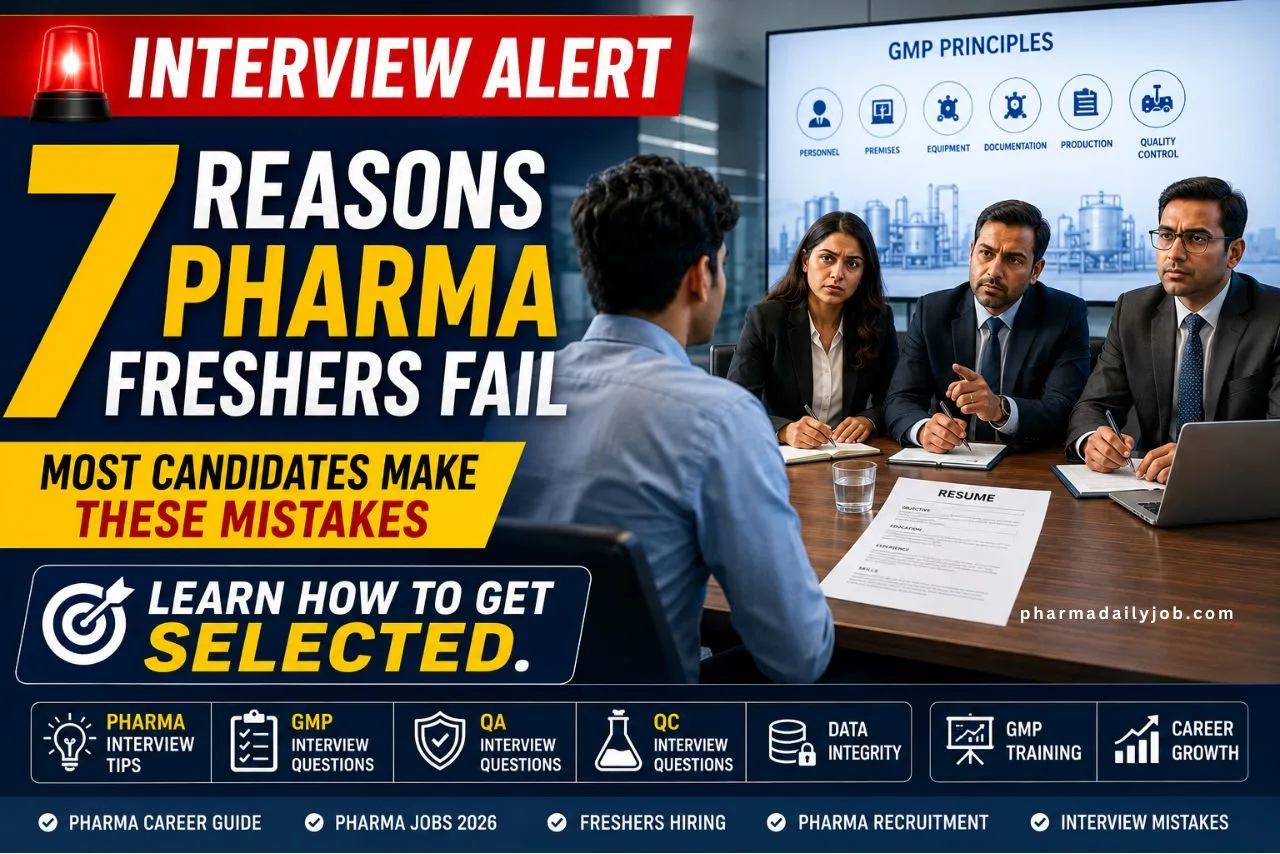
Every year, thousands of pharmacy and science graduates attend interviews hoping to secure their first job.
Many candidates have good academic records.
Some even possess certifications and internship experience.
Yet they still fail to get selected.
Why?
The answer is not always a lack of knowledge.
In many cases, candidates make avoidable mistakes that immediately reduce their chances of success.
If you’re preparing for a pharma interview in 2026, understanding these mistakes could help you stay ahead of the competition.
1. Poor Understanding of GMP Basics
One of the most common reasons candidates fail interviews is weak knowledge of Good Manufacturing Practices (GMP).
Recruiters frequently ask questions related to:
- GMP
- SOP
- CAPA
- Data Integrity
- Change Control
- Deviation
Many freshers struggle to explain these concepts confidently.
How to Avoid It
Spend time understanding pharmaceutical quality systems before attending interviews.
Even basic knowledge can make a strong impression.
2. Weak Communication Skills
You may know the correct answer.
But if you cannot explain it clearly, recruiters may assume you lack understanding.
Communication skills influence:
- Confidence
- Professionalism
- Teamwork perception
- Leadership potential
How to Avoid It
Practice speaking aloud.
Conduct mock interviews with friends or mentors.
Focus on clarity rather than complicated language.
3. Lack of Company Research
Many candidates attend interviews without knowing anything about the company.
Imagine being asked:
“Why do you want to work here?”
And having no answer.
Recruiters notice.
How to Avoid It
Before every interview, learn about:
- Company products
- Manufacturing facilities
- Recent achievements
- Business areas
This demonstrates genuine interest.
4. Poor Resume Preparation
Your resume creates the first impression.
Common mistakes include:
- Spelling errors
- Poor formatting
- Missing project details
- Generic objectives
Recruiters often reject resumes before interviews even begin.
How to Avoid It
Keep your resume professional, accurate, and relevant to the position.
5. Overconfidence or Lack of Confidence
Both extremes can be problematic.
Some candidates appear arrogant.
Others appear too nervous.
Recruiters usually prefer balanced confidence.
How to Avoid It
Answer honestly.
Maintain eye contact.
Stay calm and professional.
Remember that interviews are conversations, not interrogations.
6. Inability to Explain Academic Projects
Many freshers list projects and internships on their resumes.
But during interviews, they cannot explain what they actually learned.
This creates doubt about credibility.
How to Avoid It
Be prepared to discuss:
- Project objectives
- Methodology
- Results
- Lessons learned
If it’s on your resume, expect questions about it.
7. Ignoring Current Industry Trends
The pharmaceutical industry continues to evolve.
Recruiters increasingly value candidates who stay informed about:
- Regulatory updates
- Manufacturing trends
- Data Integrity requirements
- Digital transformation
- AI applications in pharma
How to Avoid It
Read industry news regularly and follow pharmaceutical developments.
What Recruiters Really Want
Many freshers believe recruiters are searching for perfect candidates.
That is rarely true.
Most recruiters want candidates who demonstrate:
✅ Learning Attitude
✅ Basic Technical Knowledge
✅ Professional Communication
✅ Reliability
✅ Teamwork
✅ Problem-Solving Ability
If you can show these qualities, your chances improve significantly.
A Real Interview Lesson
Consider two candidates.
Both hold the same degree.
Both graduated in the same year.
One candidate spends two weeks preparing.
The other walks into the interview hoping for the best.
Who gets selected?
Preparation often makes the difference.
Success in interviews is rarely accidental.
The Simple Formula for Interview Success
Focus on these five areas:
Technical Knowledge
Learn GMP, SOPs, and basic pharma concepts.
Communication
Practice explaining answers clearly.
Confidence
Stay positive and composed.
Research
Understand the company and role.
Preparation
Anticipate common interview questions.
These habits can significantly improve your performance.
Final Thoughts
Failing an interview does not mean you’re not capable.
In many cases, it simply means there is room for improvement.
Every interview teaches valuable lessons.
The candidates who learn, adapt, and continue preparing are often the ones who eventually succeed.
In 2026, competition for pharma jobs remains strong.
But candidates who invest in preparation, communication, and technical knowledge can create opportunities that others miss.
Your next interview could be the one that changes your career.
FAQ
Why do pharma freshers fail interviews?
Common reasons include poor GMP knowledge, weak communication skills, lack of preparation, and limited awareness of industry trends.
What topics should I prepare for pharma interviews?
GMP, SOP, CAPA, Data Integrity, Change Control, Deviation, and basic pharmaceutical concepts.
How important is communication during interviews?
Very important. Recruiters evaluate both knowledge and the ability to communicate effectively.
Can freshers get selected without experience?
Yes. Many companies hire freshers based on qualifications, technical understanding, communication skills, and learning attitude.