
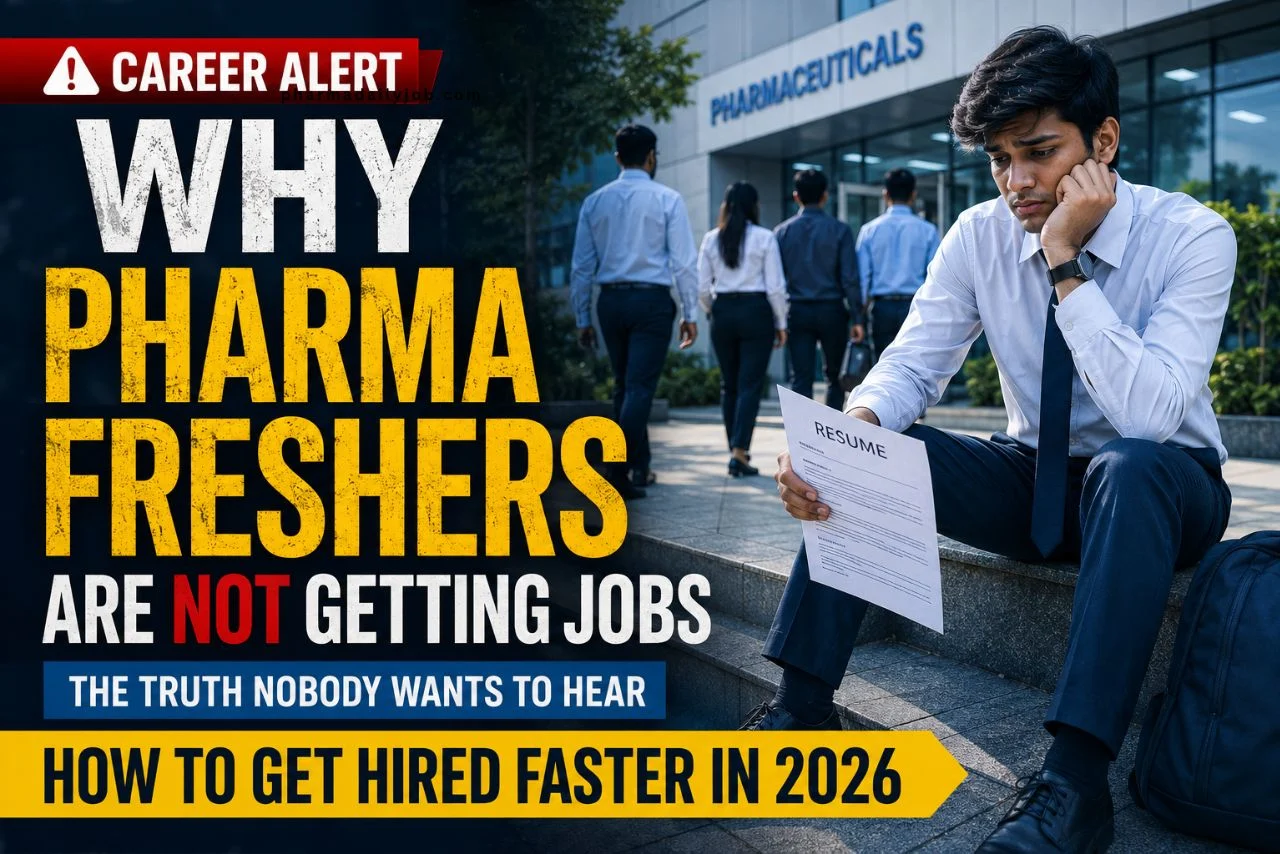
Why Pharma Freshers Are Not Getting Jobs in 2026 (The Truth Nobody Wants to Hear)
Every year, thousands of students graduate with dreams of building a successful career in the pharmaceutical industry.
They complete B.Pharm, M.Pharm, D.Pharm, B.Sc., M.Sc., Biotechnology, and Life Sciences programs expecting that a degree will automatically lead to a good job.
But reality often feels very different.
Many freshers apply to hundreds of vacancies, attend interviews, and still struggle to receive an offer letter.
This situation creates frustration, self-doubt, and uncertainty about the future.
So what is really happening?
Why are so many pharma freshers finding it difficult to secure their first job in 2026?
The answer may surprise you.
The Biggest Myth About Pharma Careers
Many freshers believe that completing a degree is enough.
Unfortunately, recruiters often look beyond academic qualifications.
When two candidates have similar educational backgrounds, companies usually select the candidate who demonstrates better practical knowledge, communication skills, and industry awareness.
A degree opens the door.
Skills help you walk through it.
The Skills Gap Problem
One of the biggest challenges facing freshers today is the gap between academic learning and industry expectations.
Recruiters frequently notice that candidates struggle to explain:
- GMP concepts
- SOPs
- Data Integrity
- CAPA
- Deviation
- Change Control
These are basic topics commonly discussed during pharma interviews.
Candidates who understand these concepts often have a significant advantage.
Applying Without Preparation
Many freshers apply for every available vacancy without understanding the job requirements.
As a result:
- Resumes get rejected
- Interviews become difficult
- Confidence decreases
A smarter approach is to focus on roles that match your qualifications and career goals.
Quality applications are usually more effective than quantity.
Communication Skills Matter More Than You Think
One of the most common reasons candidates fail interviews has nothing to do with technical knowledge.
It’s communication.
Many candidates know the answer but struggle to explain it clearly.
Recruiters often evaluate:
- Confidence
- Clarity
- Professionalism
- Problem-solving ability
Strong communication skills can make a powerful first impression.
A Common Interview Scenario
Imagine two freshers attending the same interview.
The first candidate provides short, uncertain answers.
The second candidate explains concepts clearly, maintains confidence, and demonstrates enthusiasm for learning.
Even if both candidates have similar qualifications, the second candidate is more likely to receive an offer.
This happens every day across the industry.
The Resume Mistake That Costs Candidates Interviews
Your resume is often the first thing recruiters see.
Common mistakes include:
- Spelling errors
- Poor formatting
- Missing internship details
- Generic career objectives
- Unclear contact information
A well-structured resume immediately creates a more professional impression.
Why Industry Awareness Is Important
Employers increasingly prefer candidates who understand what’s happening in the pharmaceutical industry.
This includes awareness of:
- GMP updates
- Regulatory developments
- Manufacturing trends
- Drug safety initiatives
- Industry hiring patterns
Candidates who stay informed often perform better during interviews.
The Real Difference Between Successful and Unsuccessful Freshers
After speaking with recruiters and observing hiring trends, one pattern becomes clear.
Successful candidates tend to:
- Prepare before interviews
- Improve communication skills
- Learn industry fundamentals
- Stay updated
- Continuously develop new skills
Unsuccessful candidates often rely only on their degree.
The difference is preparation.
What Pharma Companies Actually Want
Recruiters are not necessarily searching for perfect candidates.
They are looking for individuals who show:
- Learning attitude
- Professional behavior
- Basic technical knowledge
- Communication skills
- Problem-solving ability
- Reliability
These qualities can often outweigh experience when hiring freshers.
The Opportunity Most Freshers Ignore
Many candidates focus only on getting a job.
Very few focus on becoming employable.
There is a difference.
Getting a degree is an achievement.
Building valuable skills is a strategy.
The candidates who invest in themselves usually create more opportunities over time.
How To Improve Your Chances of Getting Hired
Start with these steps:
Learn GMP Thoroughly
Understand the fundamentals that recruiters commonly ask about.
Improve Communication Skills
Practice introducing yourself and answering common interview questions.
Build a Professional Resume
Highlight internships, projects, certifications, and achievements.
Stay Updated
Follow pharmaceutical news, industry trends, and regulatory updates.
Keep Learning
The industry rewards professionals who continuously improve.
Final Thoughts
The pharmaceutical industry continues to offer excellent career opportunities.
However, competition is increasing.
The freshers who succeed are not always the smartest.
They are often the most prepared.
If you focus on learning, communication, industry awareness, and continuous improvement, you can significantly increase your chances of securing your first pharma job in 2026.
The opportunity is still there.
The question is whether you are ready for it.
FAQ
Why are pharma freshers struggling to get jobs?
Many candidates lack industry knowledge, interview preparation, communication skills, and awareness of recruiter expectations.
What skills should pharma freshers learn first?
GMP, SOPs, Data Integrity, Communication Skills, and Interview Preparation are excellent starting points.
Is the pharmaceutical industry still hiring freshers?
Yes. Many companies continue to hire freshers across QA, QC, Production, Regulatory Affairs, and Clinical Research.
How can I improve my chances of getting selected?
Focus on technical preparation, communication skills, resume quality, and industry awareness.
Link this article to:
- Godrej Chemicals Walk-In 2026 | Freshers Jobs Ambernath QA QC Production
- Pfizer Hiring Report Coordinator Associate 2026 | Hybrid Pharma Job in Chennai
- Honour Lab Walk-In Interview 2026 – Junior Officer Jobs for Production, QC, QA & TSD in Hyderabad
- BioMatrix Healthcare Walk-In Interview 2026 | Pharma Jobs in Ahmedabad (Production, QC, ADL & Engineering)
- HOF Pharma Walk-In Interview 2026 | Production, QC, QA, RA, F&D Jobs in Sanand (Ahmedabad)