
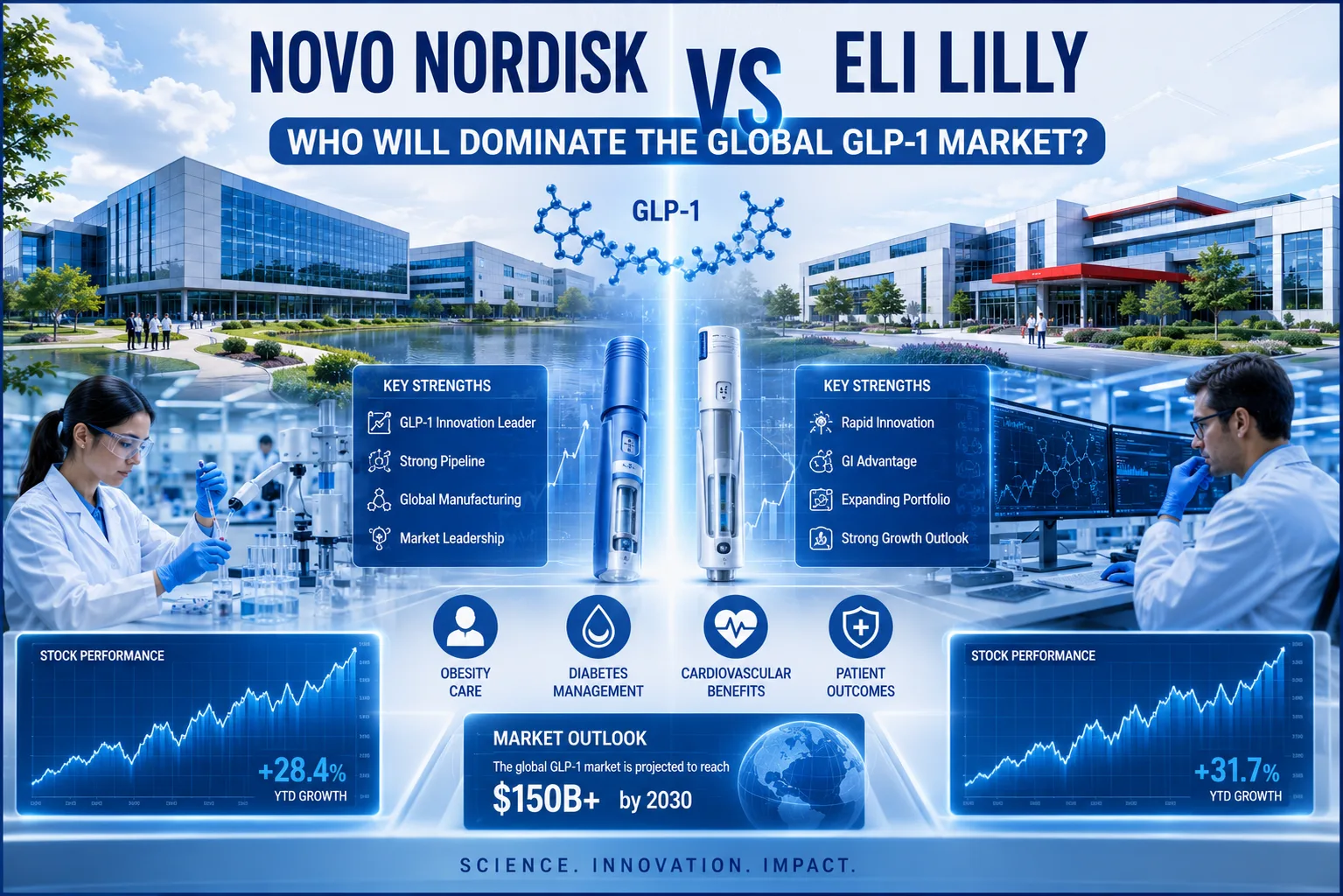
The global pharmaceutical industry is witnessing one of the biggest healthcare competitions in history. Two industry giants—Novo Nordisk and Eli Lilly—are leading the race to dominate the rapidly expanding GLP-1 weight loss and diabetes drug market.
With blockbuster medicines such as Ozempic®, Wegovy®, Mounjaro®, and Zepbound®, these companies have transformed the treatment of type 2 diabetes and obesity while creating one of the fastest-growing pharmaceutical markets in the world.
According to industry analysts, the global GLP-1 market is expected to grow significantly over the next decade as demand for obesity and diabetes treatments continues to rise. This has made the competition between Novo Nordisk and Eli Lilly one of the most closely watched stories in healthcare, biotechnology, and the stock market.
What Are GLP-1 Drugs?
GLP-1 (Glucagon-Like Peptide-1) receptor agonists are prescription medicines used to improve blood sugar control in people with type 2 diabetes. Some GLP-1 medicines are also approved for chronic weight management in eligible patients.
These medicines work by helping regulate blood sugar, slowing stomach emptying, and increasing feelings of fullness. Treatment decisions should always be made with a qualified healthcare professional, and these medicines should only be used for their approved indications.
Novo Nordisk: A Pioneer in the GLP-1 Market
Novo Nordisk has built a global reputation through decades of research in diabetes care.
Its portfolio includes:
- Ozempic®
- Wegovy®
- Rybelsus®
The company has invested billions of dollars in expanding manufacturing facilities to meet global demand. It has also increased production capacity through acquisitions and facility upgrades.
Novo Nordisk’s Strengths
- Strong diabetes expertise
- Global manufacturing network
- Extensive clinical research
- Established physician confidence
- Significant investment in obesity care
The company continues to develop next-generation treatments aimed at improving outcomes for people living with chronic metabolic diseases.
Eli Lilly: A Fast-Growing Competitor
Eli Lilly has rapidly strengthened its position with medicines such as:
- Mounjaro®
- Zepbound®
The company has announced major investments in U.S. manufacturing and research facilities to support increasing demand and future product development.
Eli Lilly’s Competitive Advantages
- Rapid innovation
- Expanding manufacturing capacity
- Strong research pipeline
- Investment in next-generation therapies
- Global commercial expansion
Industry observers consider Eli Lilly one of the fastest-growing pharmaceutical companies in the obesity treatment market.
Manufacturing Expansion
Both companies are investing heavily to increase production capacity.
Novo Nordisk
- New manufacturing investments
- Expanded injectable medicine production
- Increased global supply capabilities
Eli Lilly
- Multi-billion-dollar manufacturing projects
- Additional production facilities
- Supply chain expansion
- Automation and digital manufacturing technologies
These investments aim to improve long-term supply while supporting future product launches.
Innovation Beyond Today’s Medicines
The competition extends beyond currently marketed products.
Researchers are exploring:
- Next-generation GLP-1 therapies
- Combination hormone medicines
- Longer-acting formulations
- Oral treatment options
- Improved delivery systems
Clinical research remains essential before any new treatment becomes available to patients.
Market Competition
Several factors will influence future leadership:
- Clinical evidence
- Manufacturing capacity
- Regulatory approvals
- Global market access
- Research and development
- Supply chain resilience
Success will depend not only on scientific innovation but also on the ability to reliably produce and distribute medicines worldwide.
Impact on Patients
Greater competition in the GLP-1 market may encourage continued innovation and expanded treatment options over time.
However, medicine availability, pricing, insurance coverage, and prescribing decisions vary by country and healthcare system.
Patients should always discuss treatment choices with their healthcare provider.
Career Opportunities in the GLP-1 Industry
Rapid growth in obesity and diabetes research is creating demand for professionals in:
- Pharmaceutical Manufacturing
- Clinical Research
- Regulatory Affairs
- Pharmacovigilance
- Quality Assurance (QA)
- Quality Control (QC)
- Medical Affairs
- Supply Chain Management
- Process Engineering
- Biostatistics
Professionals with expertise in biologics, injectable medicines, GMP, and regulatory compliance continue to be highly sought after.
Investment Perspective
The GLP-1 market has attracted significant attention from investors due to its long-term growth potential.
Both Novo Nordisk and Eli Lilly continue to invest in:
- Research and development
- Manufacturing expansion
- Global commercialization
- Digital healthcare
- Future pipeline medicines
Market performance can change based on clinical results, regulatory decisions, competition, and broader economic conditions. This article is for informational purposes and is not investment advice.
Official Sources
- Novo Nordisk Newsroom: https://www.novonordisk.com/news-and-media.html
- Eli Lilly Investor Relations: https://investor.lilly.com/news-releases
- U.S. Food and Drug Administration (FDA): https://www.fda.gov
- Reuters Healthcare & Pharmaceuticals: https://www.reuters.com/business/healthcare-pharmaceuticals/
Future Outlook
Demand for effective treatments for obesity and type 2 diabetes is expected to remain strong for years to come.
Both Novo Nordisk and Eli Lilly are well positioned to play leading roles through continued investment in innovation, manufacturing, and scientific research.
Rather than declaring a single winner, the current landscape suggests that both companies are shaping the future of metabolic disease treatment while competing to deliver new therapies and improve patient care.
Conclusion
The battle between Novo Nordisk and Eli Lilly represents more than a commercial rivalry—it reflects the rapid evolution of diabetes and obesity treatment. Their continued investments in GLP-1 medicines, research, and manufacturing are influencing the future of healthcare around the world.
As new clinical data, regulatory decisions, and product innovations emerge, the competition will continue to evolve. For healthcare professionals, investors, and patients alike, the GLP-1 market is likely to remain one of the most important areas to watch in the pharmaceutical industry over the coming years.
Frequently Asked Questions
Which company currently leads the GLP-1 market?
Both Novo Nordisk and Eli Lilly are major leaders. Market leadership varies depending on the specific product, geography, and measurement used, such as sales, prescriptions, or market share.
Are GLP-1 medicines only for weight loss?
No. Many GLP-1 medicines are approved for type 2 diabetes, while some are also approved for chronic weight management in eligible patients.
Why are these companies investing so much in manufacturing?
Growing global demand has increased the need for additional production capacity and stronger supply chains.
Is the GLP-1 market expected to continue growing?
Industry analysts generally expect continued growth due to rising demand, ongoing research, and new product development, although future market performance depends on multiple factors.
Link this article to:
- BioClinAarc Pharmacovigilance Jobs 2026: PV, Medical Review & PSUR Openings
- Deccan Fine Chemicals Walk-In Interview 2026: Production Chemist Jobs for Freshers & Experienced
- Subros Limited Walk-In Interview 2026: Engineering, Production & Multiple Job Openings in Ahmedabad
- Lactose India Limited Jobs 2026: Process & Product Development Roles in Vadodara
- Farbe Firma Pharma Jobs 2026: QA, QC, Production & Engineering Roles in Ankleshwar
- Gland Pharma Walk-In Interview 2026: Production Chemist Jobs in Hyderabad