

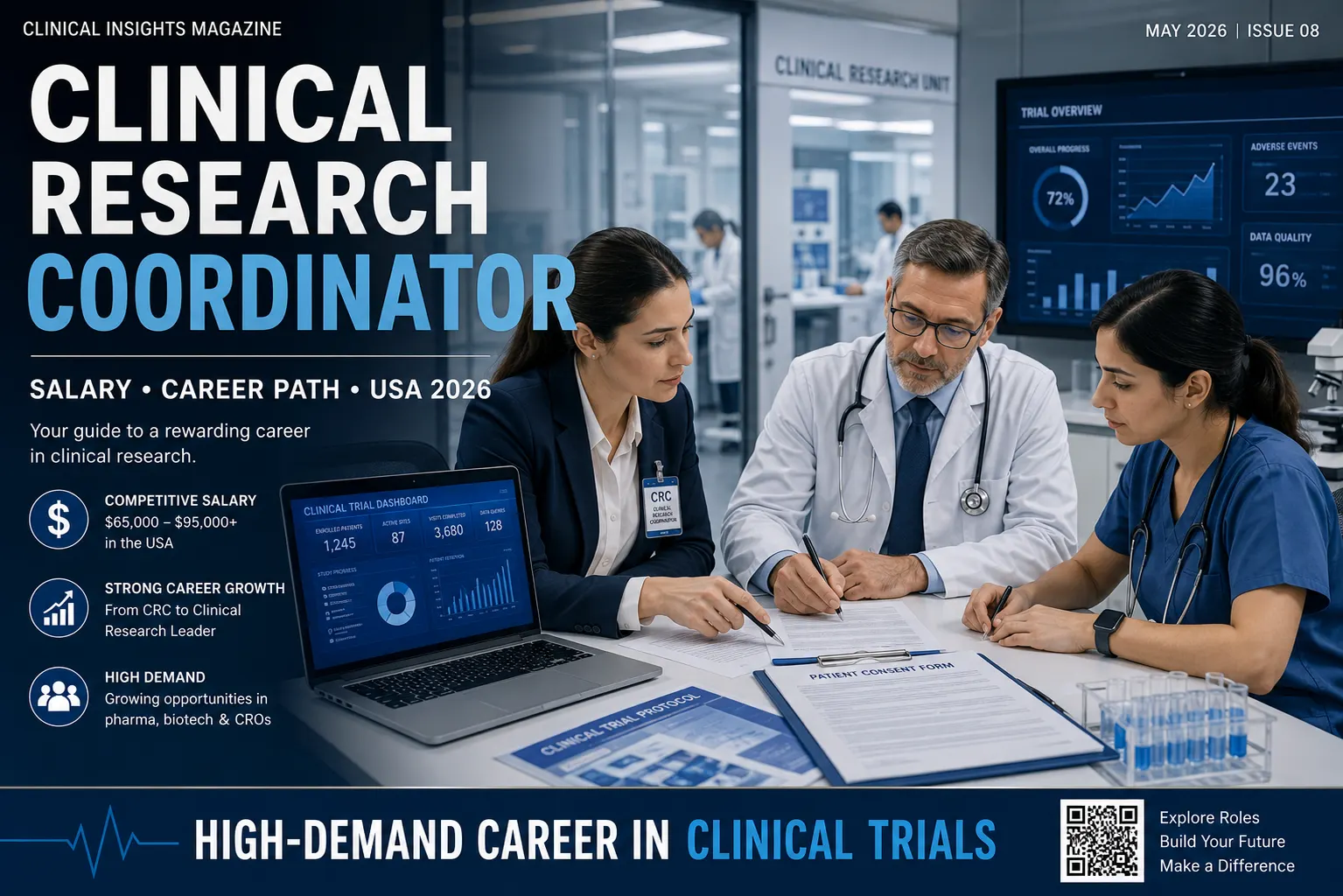
Clinical Research Coordinators (CRCs) play a key role in managing clinical trials, ensuring participant safety, maintaining study documentation, and supporting investigators.
With continued investment in drug development and medical research, demand for skilled CRCs remains strong across hospitals, academic institutions, CROs, and pharmaceutical companies.
What Does a Clinical Research Coordinator Do?
Typical responsibilities include:
- Coordinating clinical trial activities
- Scheduling participant visits
- Maintaining study records
- Ensuring protocol compliance
- Supporting investigators
- Managing regulatory documentation
- Reporting study progress
- Communicating with sponsors
Average Salary in the USA
| Experience | Estimated Salary |
|---|---|
| Entry Level | $60,000–$75,000 |
| Experienced CRC | $75,000–$100,000 |
| Senior CRC | $100,000–$120,000+ |
| Clinical Research Manager | $120,000–$160,000+ |
Actual salaries vary based on location, employer, therapeutic area, and experience.
Qualifications
Preferred backgrounds include:
- B.Pharm
- PharmD
- Nursing
- Biology
- Biotechnology
- Public Health
- Life Sciences
Skills Employers Value
- Good Clinical Practice (GCP)
- Clinical trial coordination
- Documentation
- Communication
- Time management
- Regulatory compliance
- Electronic data capture (EDC)
- Patient interaction
Career Growth
- Clinical Research Assistant
- Clinical Research Coordinator
- Senior CRC
- Clinical Trial Manager
- Clinical Operations Manager
- Director of Clinical Operations
Industries Hiring CRCs
- Pharmaceutical companies
- Biotechnology firms
- Contract Research Organizations (CROs)
- Academic medical centers
- Hospitals
- Research institutes
FAQ
Can fresh graduates become CRCs?
Some entry-level roles are available, though requirements vary by employer.
Is CRC a good career?
It offers opportunities for advancement into clinical operations, project management, and related fields.
Link this article to:
- PI Industries Walk-in Drive 2026 | Research Scientist Jobs in Udaipur (12 july)
- Vamsi Pharma Walk-In Interview 2026 | Production, QA, QC & Multiple Pharma Jobs
- Top 25 Highest-Paying Pharmaceutical Companies in the USA (2026 Salary Report)
- Nagindas Hiralal Bhayani Pharma Jobs 2026 | QA, QC, Maintenance & API Openings in Ankleshwar
- Ortiv-Q3 Hiring Business Development Executive/Manager in Ahmedabad | Pharma CRO Jobs 2026