

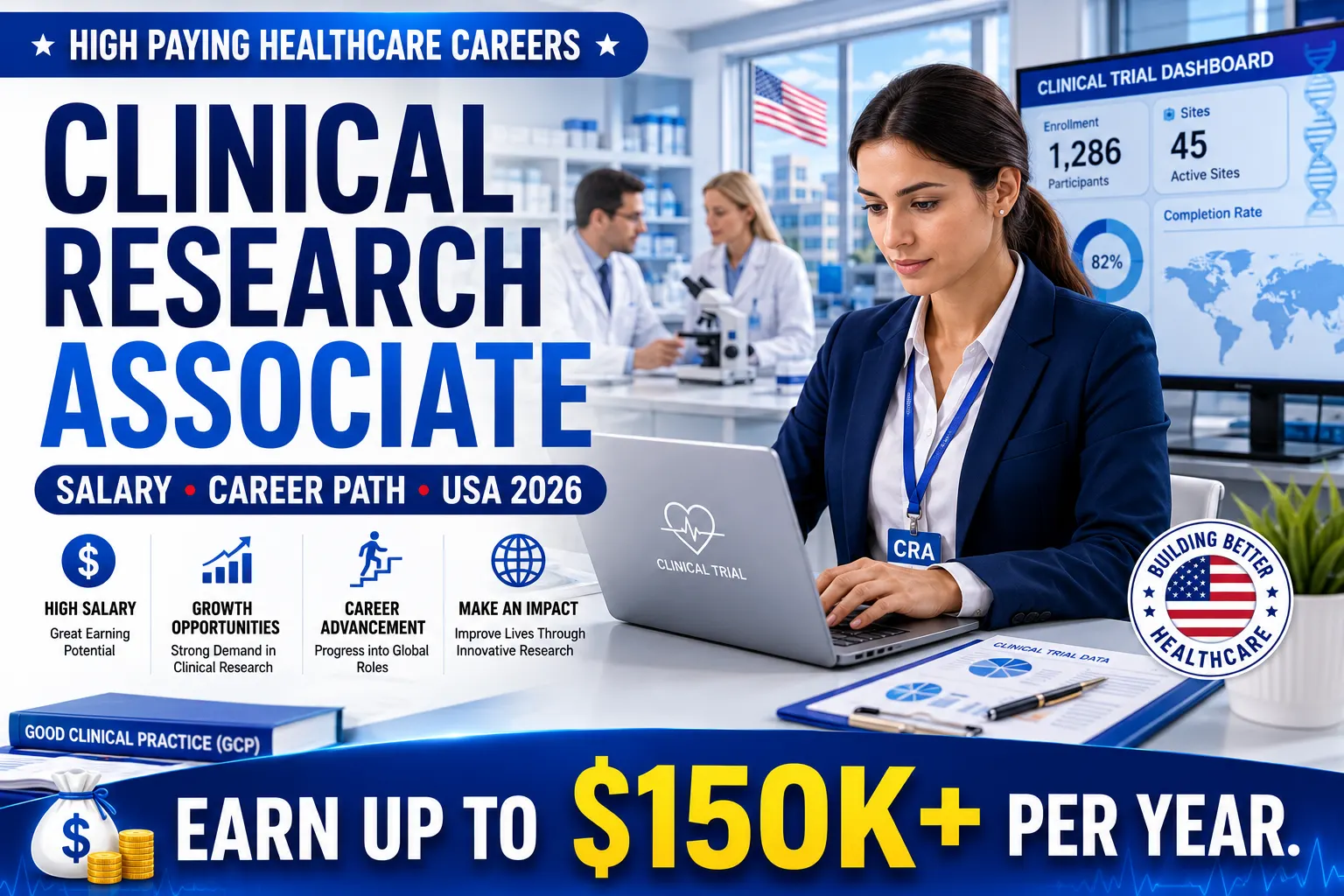
Clinical Research Associate Salary in USA 2026: How to Earn $150,000+ Without Becoming a Doctor
Most people believe that high-paying healthcare careers require years of medical school.
That isn’t always true.
One of the fastest-growing healthcare careers in the United States is Clinical Research Associate (CRA)—a profession that plays a key role in bringing new medicines and medical devices to patients.
As pharmaceutical companies expand clinical trials and biotechnology research, demand for experienced CRAs continues to grow.
For pharmacy, nursing, life science, and healthcare graduates, this career offers strong salaries, travel opportunities, and long-term growth.
What Does a Clinical Research Associate Do?
Clinical Research Associates oversee clinical trials to ensure they are conducted according to regulations and study protocols.
Typical responsibilities include:
- Monitoring clinical trial sites
- Verifying study data
- Ensuring patient safety
- Reviewing regulatory documents
- Coordinating with investigators
- Maintaining Good Clinical Practice (GCP) standards
- Preparing monitoring reports
- Supporting FDA inspection readiness
Average CRA Salary in the USA (2026)
While exact salaries vary by employer, experience, and location, CRAs are generally among the better-paid professionals in clinical research.
| Experience | Estimated Annual Salary |
|---|---|
| Entry-Level CRA | $70,000–$95,000 |
| CRA II | $95,000–$120,000 |
| Senior CRA | $120,000–$150,000+ |
| Lead CRA | $140,000–$170,000+ |
| Clinical Trial Manager | $160,000–$220,000+ |
Senior professionals in specialized therapeutic areas may earn even more.
Who Can Become a CRA?
Common educational backgrounds include:
- PharmD
- B.Pharm
- M.Pharm
- Nursing
- Biology
- Biotechnology
- Life Sciences
- Public Health
Many employers also value internship or clinical research experience.
Essential Skills
Successful CRAs typically have:
- Good Clinical Practice (GCP) knowledge
- Clinical trial monitoring skills
- Strong communication
- Documentation accuracy
- Time management
- Attention to detail
- Regulatory awareness
- Problem-solving ability
Certifications That Can Help
Professional certifications can strengthen your profile, including:
- GCP Training
- Clinical Research Certification
- ICH-GCP Courses
- Human Subject Protection Training
These are not always mandatory but can improve competitiveness.
Remote and Hybrid Opportunities
Many sponsors and Contract Research Organizations now offer hybrid or remote CRA positions, particularly for document review, project coordination, and centralized monitoring.
Career Growth Path
A common progression is:
- Clinical Trial Assistant
- Clinical Research Coordinator
- Clinical Research Associate
- Senior CRA
- Lead CRA
- Clinical Trial Manager
- Director of Clinical Operations
Is This Career Worth It?
Clinical research offers:
- Competitive salaries
- International career opportunities
- Continuous learning
- Exposure to innovative therapies
- Opportunities across pharmaceutical, biotech, and medical device companies
It can be an excellent option for healthcare professionals who enjoy science, organization, and collaboration.
FAQ
Is prior experience required to become a CRA?
Some employers hire entry-level candidates, while others prefer previous clinical research experience.
Can pharmacists become Clinical Research Associates?
Yes. Pharmacy graduates are commonly employed in clinical research roles.
Is the CRA role remote?
Some positions are remote or hybrid, while others require travel to clinical sites.
What is the biggest advantage of becoming a CRA?
Strong career growth potential combined with opportunities to contribute to medical innovation.
Link this article to:
- Sigachi Industries Walk-In Interview 2026 | Production, QC, Maintenance & Utility Jobs in Dahej
- MRF Walk-In Interview 2026 | Engineers, Supervisors & Assistants Jobs in Vadodara (Dahej Plant)
- Titan Pharmaplus Hiring Purchase Executive / Sr Executive | Pharma Supply Chain Jobs in Navi Mumbai 2026
- Viatris (Mylan) Hiring QC Professionals 2026 | Pharma Quality Control Jobs in Nashik | Walk-In Daman
- Synergene Active Ingredients Hiring R&D Professionals | Pharma API Jobs in Hyderabad 2026