
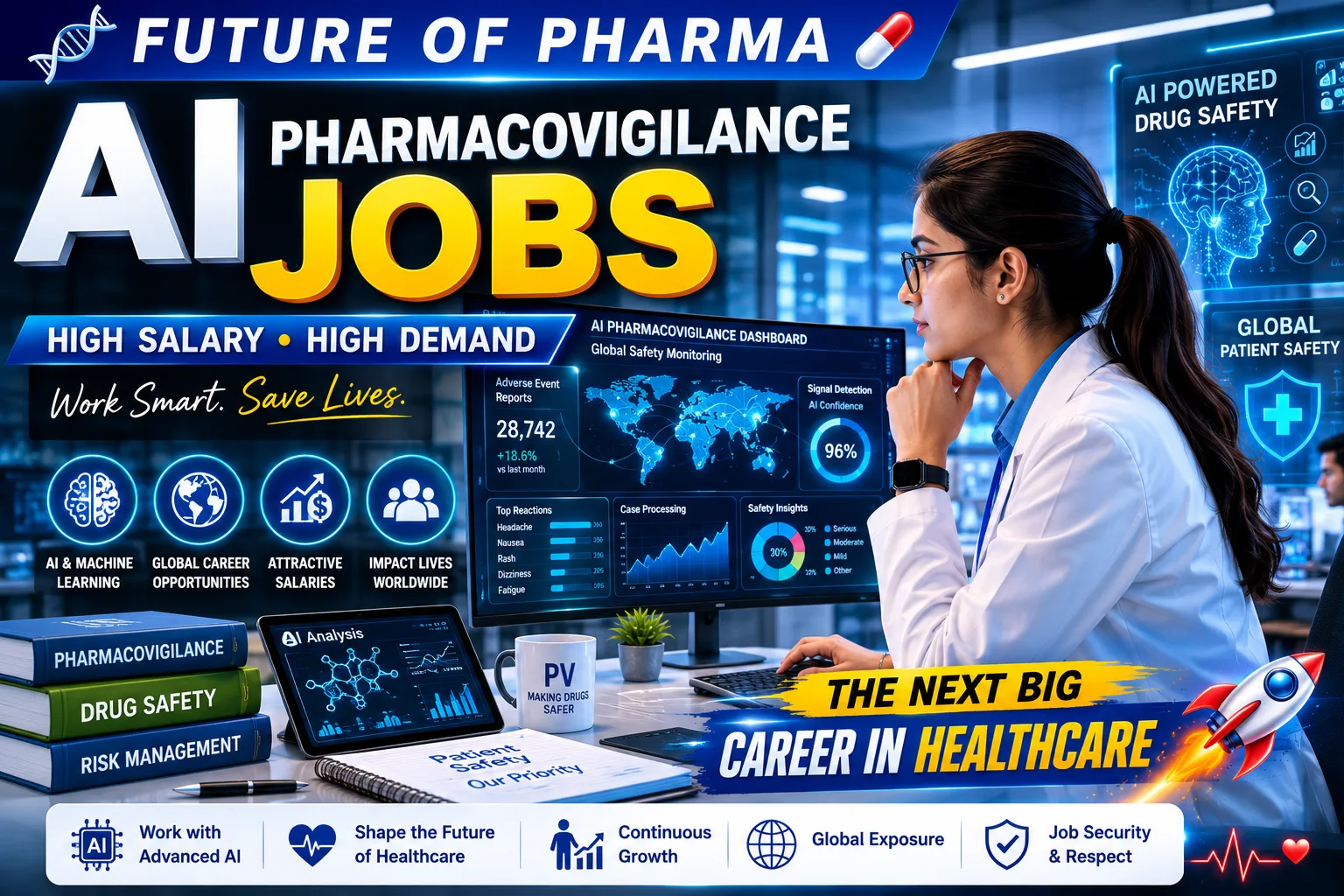
AI Pharmacovigilance Jobs 2026: Why Drug Safety Professionals Could Be the Highest-Paid Pharma Experts of the Future
Ten years ago, pharmacovigilance was considered a back-office pharmaceutical function.
Today, it is becoming one of the most important and fastest-evolving areas in healthcare.
Artificial Intelligence is transforming how pharmaceutical companies process adverse event reports, identify safety signals, manage regulatory compliance, and protect patients worldwide. Experts increasingly point to AI, machine learning, and advanced analytics as major forces shaping the future of drug safety.
For pharmacy graduates and experienced professionals, this shift is creating new career opportunities.
Why AI Is Changing Pharmacovigilance
Modern pharmaceutical companies process millions of safety records every year.
Traditional manual review methods are becoming increasingly difficult to scale.
AI can assist with:
- Adverse event identification
- Safety signal detection
- Literature screening
- Case prioritization
- Regulatory data analysis
- Compliance monitoring
However, because pharmacovigilance is a highly regulated field, companies are adopting AI cautiously and still rely heavily on human expertise. Industry discussions suggest that AI work is often integrated into existing PV, compliance, and safety systems roles rather than replacing professionals.
The New High-Paying AI + Drug Safety Roles
AI Pharmacovigilance Specialist
Combines drug safety expertise with automation and analytics.
Safety Data Scientist
Analyzes large-scale safety datasets and trends.
Signal Detection Expert
Identifies potential risks before they become major concerns.
PV Systems Specialist
Manages safety databases and workflow automation.
Drug Safety Scientist
Supports global safety assessments and risk evaluation.
Why Recruiters Are Paying More
Pharmaceutical companies increasingly need professionals who understand both:
- Drug Safety
- Regulatory Compliance
- Data Analytics
- AI-Assisted Workflows
Professionals who can bridge healthcare knowledge and technology skills are becoming especially valuable. Discussions among professionals in the sector highlight growing demand for people who understand both pharmacovigilance and automation.
Skills That Will Be in Demand
Pharmacovigilance Fundamentals
- ICSR Processing
- MedDRA Coding
- Signal Detection
- Risk Management
Technology Skills
- AI Fundamentals
- Data Analysis
- Safety Systems
- Automation Tools
Regulatory Knowledge
- FDA Requirements
- EMA Guidelines
- GVP Standards
- Compliance Frameworks
Remote Opportunities Are Growing
Many CROs and life sciences organizations are hiring for remote pharmacovigilance, drug safety, and regulatory affairs positions. Recent hiring trends show continued growth in remote and hybrid opportunities across these functions.
This creates opportunities for professionals to work with global pharmaceutical companies without relocating.
Salary Potential in 2026
Entry-Level PV Professional
$60,000 – $90,000
Pharmacovigilance Specialist
$90,000 – $130,000
Safety Scientist
$120,000 – $170,000
AI-Enabled Drug Safety Expert
$150,000+
Actual compensation varies by employer, experience, and location.
The Future of Pharma Careers
The future is not AI versus pharmacists.
The future is professionals who understand healthcare and know how to work effectively with technology.
Industry experts continue to emphasize that AI is accelerating drug development, safety monitoring, and healthcare innovation while creating demand for skilled professionals who can manage these systems responsibly.
For candidates entering the pharmaceutical industry in 2026, pharmacovigilance combined with AI awareness may become one of the strongest long-term career paths.
FAQ
Is AI replacing pharmacovigilance professionals?
No. AI is helping automate some tasks, but human expertise remains essential for safety assessment and regulatory compliance.
Is pharmacovigilance a good career in 2026?
Yes. Drug safety, regulatory compliance, and remote healthcare operations continue to create strong career opportunities.
Which qualification is best?
B.Pharm, M.Pharm, PharmD, Life Sciences, Biotechnology, and related healthcare degrees are commonly accepted.
Can freshers enter pharmacovigilance?
Yes. Many organizations offer entry-level opportunities and trainee programs in drug safety operations.
Link this article to:
- Lupin Work From Home Jobs 2026: Remote Pharmacovigilance, Regulatory Affairs & Medical Writing Careers
- AI Drug Discovery Jobs 2026: Why Pharmaceutical Companies Are Paying Premium Salaries for AI Professionals
- Marksans Pharma Goa Hiring 2026 | Production Operators & Officers Jobs in Pharma Industry
- SP Accure Labs Walk-In Interview 2026 | Pharma Jobs in Hyderabad for Production, AR&D, Microbiology
- AGS Health Walk-In Drive 2026 | Medical Coder Trainee Jobs in Vellore for Freshers