
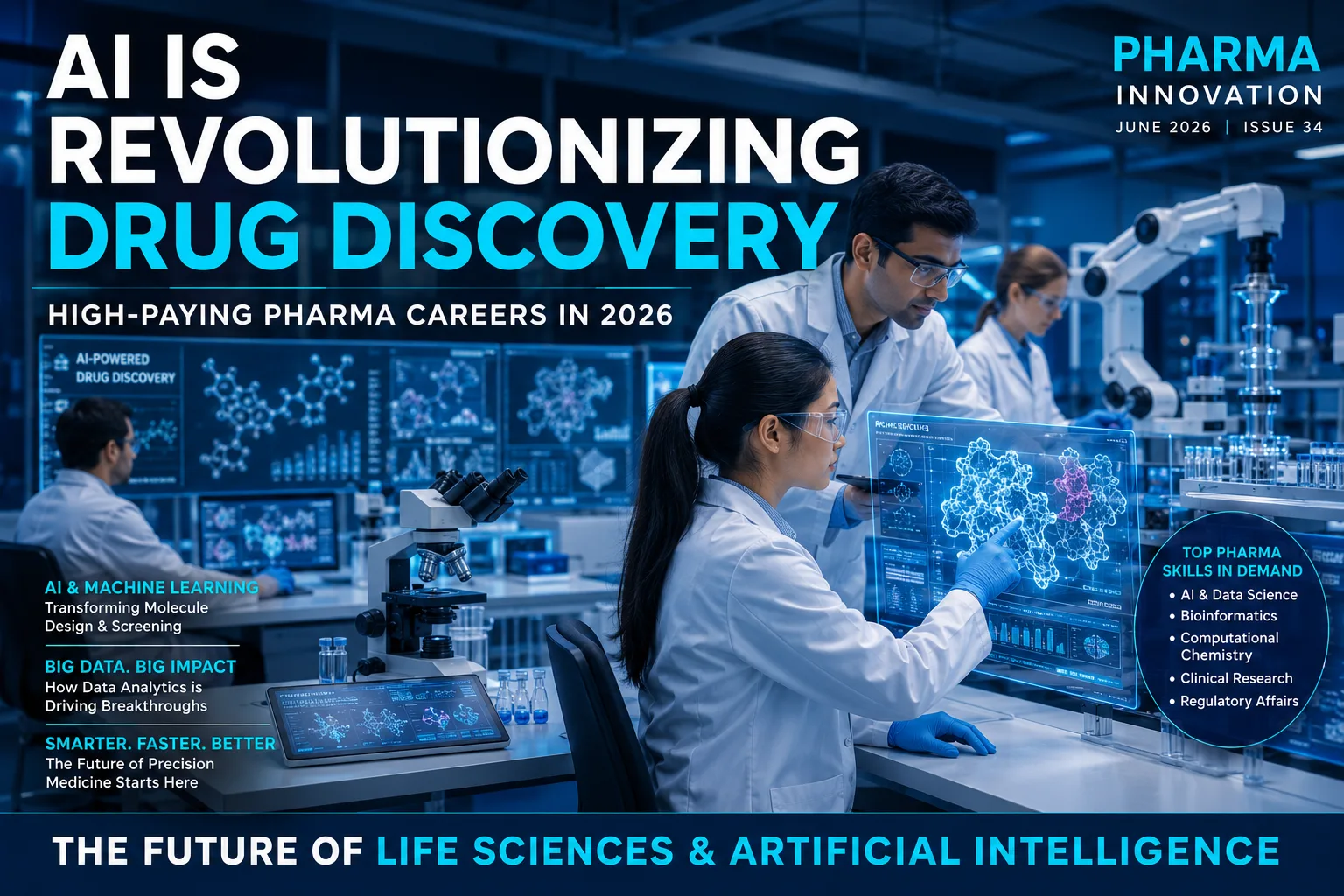
Artificial intelligence (AI) is becoming an important tool in pharmaceutical research. Instead of replacing scientists, AI is increasingly being used to help analyze large datasets, identify potential drug candidates, and support parts of the research process.
As pharmaceutical and biotechnology companies invest more in AI-enabled research, professionals with expertise in data science, biology, chemistry, and machine learning are becoming increasingly valuable.
If you’re planning a long-term career in life sciences, AI-related roles are among the fastest-growing opportunities in 2026.
Why AI Is Becoming Important in Drug Discovery
Developing a new medicine traditionally takes many years and significant investment. AI tools can assist researchers by:
- Analyzing biological data
- Identifying potential drug targets
- Supporting molecule screening
- Predicting certain molecular properties
- Helping prioritize research candidates
AI complements scientific expertise rather than replacing laboratory research and clinical testing.
High-Paying AI Pharma Careers
AI Research Scientist
Develops AI models that support pharmaceutical research.
Estimated Salary: $150,000–$250,000+
Machine Learning Engineer
Builds machine learning systems for life sciences applications.
Estimated Salary: $140,000–$220,000+
Computational Biologist
Analyzes biological datasets to support research.
Estimated Salary: $130,000–$210,000+
Bioinformatics Scientist
Works with genomic and molecular data.
Estimated Salary: $120,000–$200,000+
Data Scientist
Extracts insights from research and clinical datasets.
Estimated Salary: $120,000–$190,000+
AI Product Manager
Coordinates AI-based healthcare technology products.
Estimated Salary: $160,000–$250,000+
Companies Investing in AI
Many pharmaceutical and biotech organizations are investing in AI capabilities, including:
- Eli Lilly
- Pfizer
- Roche
- Novartis
- AstraZeneca
- Johnson & Johnson
- Amgen
- GSK
- Recursion
- Insilico Medicine
The type and scale of AI work varies by company and research focus.
Skills Employers Look For
To pursue AI-focused pharma roles, employers often value:
- Python
- Machine Learning
- Deep Learning
- Statistics
- Bioinformatics
- Molecular Biology
- Drug Discovery
- SQL
- Cloud Computing
- Data Visualization
Can Pharmacy Graduates Enter This Field?
Yes, depending on the role. Professionals with pharmacy or life sciences backgrounds may strengthen their profile by learning programming, data analysis, and AI fundamentals, particularly for interdisciplinary positions.
Future Outlook
AI is expected to remain an important part of pharmaceutical research, supporting scientists in areas such as target discovery, molecule design, and data analysis. Demand for professionals who understand both life sciences and AI may continue to grow.
Frequently Asked Questions
Is AI replacing pharmaceutical scientists?
Current evidence suggests AI is being used to assist researchers rather than replace them entirely. Human expertise remains essential throughout drug development.
Which AI pharma job pays the most?
Senior AI research scientists, AI product leaders, and experienced machine learning specialists are often among the higher-paying roles, though compensation varies by employer and experience.
Which degree is useful?
Relevant backgrounds include Pharmacy, Biotechnology, Biology, Computer Science, Bioinformatics, Data Science, and related disciplines.
Official Sources
- U.S. FDA: https://www.fda.gov
- National Institutes of Health (NIH): https://www.nih.gov
- Eli Lilly Newsroom: https://investor.lilly.com/news-releases
- Roche Newsroom: https://www.roche.com/media
Link this article to:
- MSN Laboratories Walk-In Drive 2026 | Production Injectables Jobs (Freshers & Experienced)
- Amneal Pharma Apprentice Hiring 2026 | B.Pharm Freshers Jobs in Ahmedabad
- Bafna Pharma Walk-In Interview 2026 | Production, QC, QA Jobs in Chennai
- Sunrise Remedies Hiring 2026 | Pharma Jobs in India – Apply Now
- Clario Hiring Clinical Data Manager in Bangalore | CDM Jobs 2026 (1+ Years Exp)