
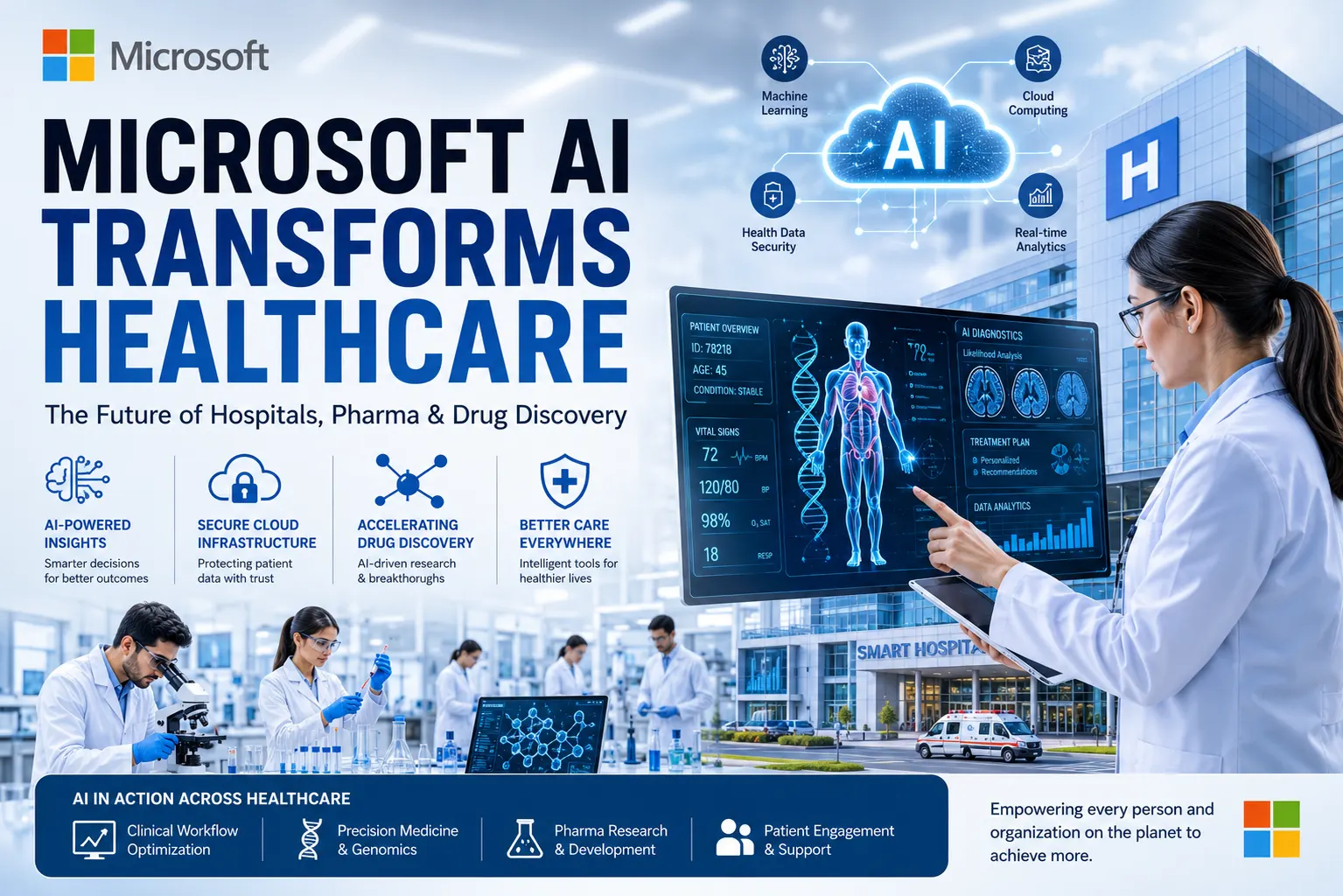
Artificial intelligence is rapidly reshaping healthcare, and Microsoft continues to expand its AI capabilities across hospitals, pharmaceutical research, clinical documentation, and digital health platforms. With advances in cloud computing, large language models, and secure healthcare solutions, AI is becoming an essential tool for improving efficiency and supporting medical professionals.
Rather than replacing doctors or scientists, Microsoft’s AI technologies are designed to assist with administrative work, data analysis, research, and decision support – allowing healthcare teams to focus more on patient care.
Why AI Is Becoming Essential in Healthcare
Healthcare organizations generate enormous amounts of clinical, operational, and research data every day. AI can help organize and analyze this information more efficiently by:
- Summarizing clinical documentation.
- Supporting medical coding and billing.
- Assisting with research literature reviews.
- Identifying patterns in healthcare data.
- Improving operational workflows.
- Helping clinicians access information faster.
These capabilities can reduce administrative burden while supporting informed decision-making.
AI in Pharmaceutical Research
Pharmaceutical companies are increasingly using AI throughout the drug development process. Potential applications include:
- Identifying promising drug targets.
- Accelerating molecule discovery.
- Optimizing clinical trial design.
- Analyzing real-world evidence.
- Supporting pharmacovigilance.
- Improving manufacturing analytics.
AI does not replace laboratory testing or regulatory review, but it can help researchers prioritize candidates and analyze complex datasets more efficiently.
Impact on Hospitals
Hospitals are adopting AI-powered tools to support:
- Electronic health record workflows.
- Patient scheduling.
- Clinical documentation.
- Resource planning.
- Diagnostic support (where validated).
- Operational efficiency.
Successful implementation requires strong governance, privacy protections, and human oversight.
Career Opportunities
The rise of AI in healthcare is creating demand for professionals in:
- Healthcare Data Science
- AI Engineering
- Bioinformatics
- Clinical Informatics
- Regulatory Affairs
- Medical Writing
- Pharmacovigilance
- Healthcare Cybersecurity
- Cloud Engineering
- Digital Health Product Management
Professionals who combine healthcare knowledge with data and technology skills are increasingly valuable.
Challenges and Responsible AI
Healthcare AI also brings important responsibilities:
- Protecting patient privacy.
- Reducing bias in AI systems.
- Maintaining transparency.
- Validating clinical performance.
- Meeting regulatory requirements.
Organizations must ensure that AI supports—not replaces—professional clinical judgment.
Official Sources
- Microsoft Healthcare: https://www.microsoft.com/en-us/industry/health
- Microsoft AI: https://www.microsoft.com/ai
- U.S. Food and Drug Administration (AI/ML resources): https://www.fda.gov
Future Outlook
AI adoption across healthcare is expected to continue growing as cloud infrastructure, machine learning, and digital health technologies mature. Companies such as Microsoft are investing heavily in platforms that help healthcare organizations improve efficiency while maintaining security and compliance.
Conclusion
Microsoft’s continued investment in healthcare AI reflects a broader industry shift toward intelligent digital tools. As AI becomes more integrated into research, hospitals, and pharmaceutical development, organizations that adopt these technologies responsibly may improve productivity, support innovation, and enhance patient care.
FAQs
How is Microsoft using AI in healthcare?
Microsoft provides AI and cloud technologies that support healthcare organizations with clinical documentation, data analysis, research workflows, and operational efficiency.
Can AI replace doctors?
No. AI is designed to assist healthcare professionals, not replace their expertise or clinical decision-making.
Why is AI important for pharmaceutical companies?
AI can help analyze large datasets, support drug discovery, optimize research, and improve operational processes, while final scientific and regulatory decisions remain with experts.
Link this article to:
- BioClinAarc Pharmacovigilance Jobs 2026: PV, Medical Review & PSUR Openings
- Deccan Fine Chemicals Walk-In Interview 2026: Production Chemist Jobs for Freshers & Experienced
- Subros Limited Walk-In Interview 2026: Engineering, Production & Multiple Job Openings in Ahmedabad
- Lactose India Limited Jobs 2026: Process & Product Development Roles in Vadodara
- Farbe Firma Pharma Jobs 2026: QA, QC, Production & Engineering Roles in Ankleshwar
- Gland Pharma Walk-In Interview 2026: Production Chemist Jobs in Hyderabad