

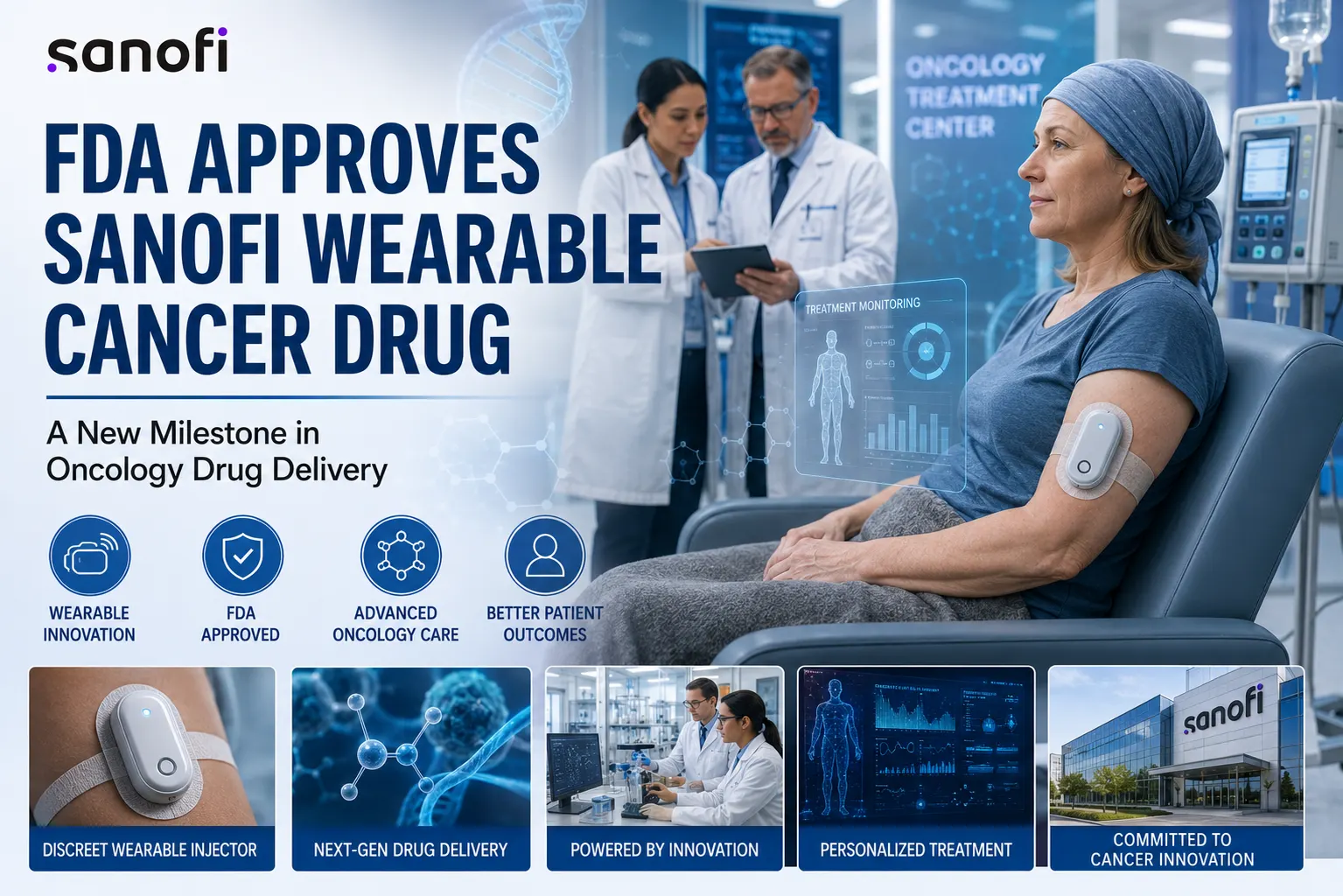
The U.S. Food and Drug Administration (FDA) has approved a wearable injector version of Sanofi’s blood cancer medicine Sarclisa for eligible patients with multiple myeloma. Instead of requiring a traditional intravenous infusion, the approved system delivers the medicine under the skin using an on-body wearable injector, potentially reducing the amount of time patients spend in infusion centers.
This approval represents another example of how pharmaceutical innovation is focusing not only on developing new medicines but also on improving the way existing treatments are delivered.
Why This Approval Matters
Multiple myeloma is a type of blood cancer that often requires repeated treatment over long periods. Traditional intravenous infusions can require lengthy clinic visits.
The newly approved wearable delivery system is designed to simplify treatment administration for eligible patients while reducing the burden on infusion centers and healthcare professionals. According to Reuters, the device allows subcutaneous delivery through an on-body injector rather than a standard IV infusion.
Benefits of Wearable Drug Delivery
Wearable drug delivery technologies continue to gain attention because they may offer several advantages:
- More convenient treatment administration.
- Less time spent in infusion clinics.
- Improved patient experience.
- Greater flexibility for healthcare providers.
- More efficient use of hospital resources.
These potential benefits depend on individual treatment plans and physician recommendations.
Impact on the Pharmaceutical Industry
The approval reflects a broader trend in pharmaceutical development where companies are investing in patient-friendly delivery technologies alongside new drug discovery.
Many manufacturers are researching:
- Wearable injectors
- Smart drug delivery systems
- Long-acting injectable medicines
- Connected healthcare devices
- Digital monitoring technologies
These innovations aim to improve treatment delivery while maintaining safety and effectiveness.
Career Opportunities
Growth in advanced drug delivery technologies is creating demand for professionals in:
- Pharmaceutical Manufacturing
- Medical Device Engineering
- Quality Assurance
- Regulatory Affairs
- Clinical Research
- Validation
- Biomedical Engineering
- Pharmacovigilance
- Product Management
- Medical Affairs
Professionals with expertise in combination products (drug-device systems), GMP, and regulatory compliance are expected to remain valuable as innovation continues.
Future Outlook
The future of oncology is expected to include not only new medicines but also smarter ways to deliver them. Wearable injectors, digital health tools, and connected medical devices may help improve treatment experiences while supporting healthcare systems.
As more pharmaceutical companies invest in drug-device combinations, innovation in patient-centered care is likely to remain a key industry focus.
Conclusion
The FDA approval of Sanofi’s wearable injector for Sarclisa highlights the continuing evolution of oncology treatment. By introducing a new administration option for eligible patients with multiple myeloma, the approval demonstrates how pharmaceutical companies are working to improve both treatment effectiveness and patient convenience.
For healthcare professionals, pharmaceutical companies, and investors, this approval represents another important milestone in the growing field of advanced drug delivery technology.
FAQs
What is Sarclisa?
Sarclisa (isatuximab) is a prescription medicine used in certain treatment regimens for eligible patients with multiple myeloma.
What is new about this FDA approval?
The FDA approved a wearable injector system that delivers Sarclisa under the skin for eligible patients, offering an alternative to intravenous administration.
Does this replace all IV treatments?
Treatment decisions depend on the approved indication, healthcare provider recommendations, and individual patient needs.
Link this article to:
- Leben Life Sciences Hiring Engineering Officer 2026 | Pharma Jobs in Akola (1–4 Years Experience)
- Senior Bioinformatician Job in Pune 2026 | Indus Health Plus Hiring (Genomics & AI Role)
- Sai Life Sciences Walk-In Interview 2026 | Production Jobs in Pharma (2–8 Years) – 11 July
- Best Personal Loan Options in 2026: How to Choose the Right Loan and Save Money
- Ind-Swift Laboratories Walk-In 2026 | QA & QC Jobs (Officer to Executive) – 12 July