

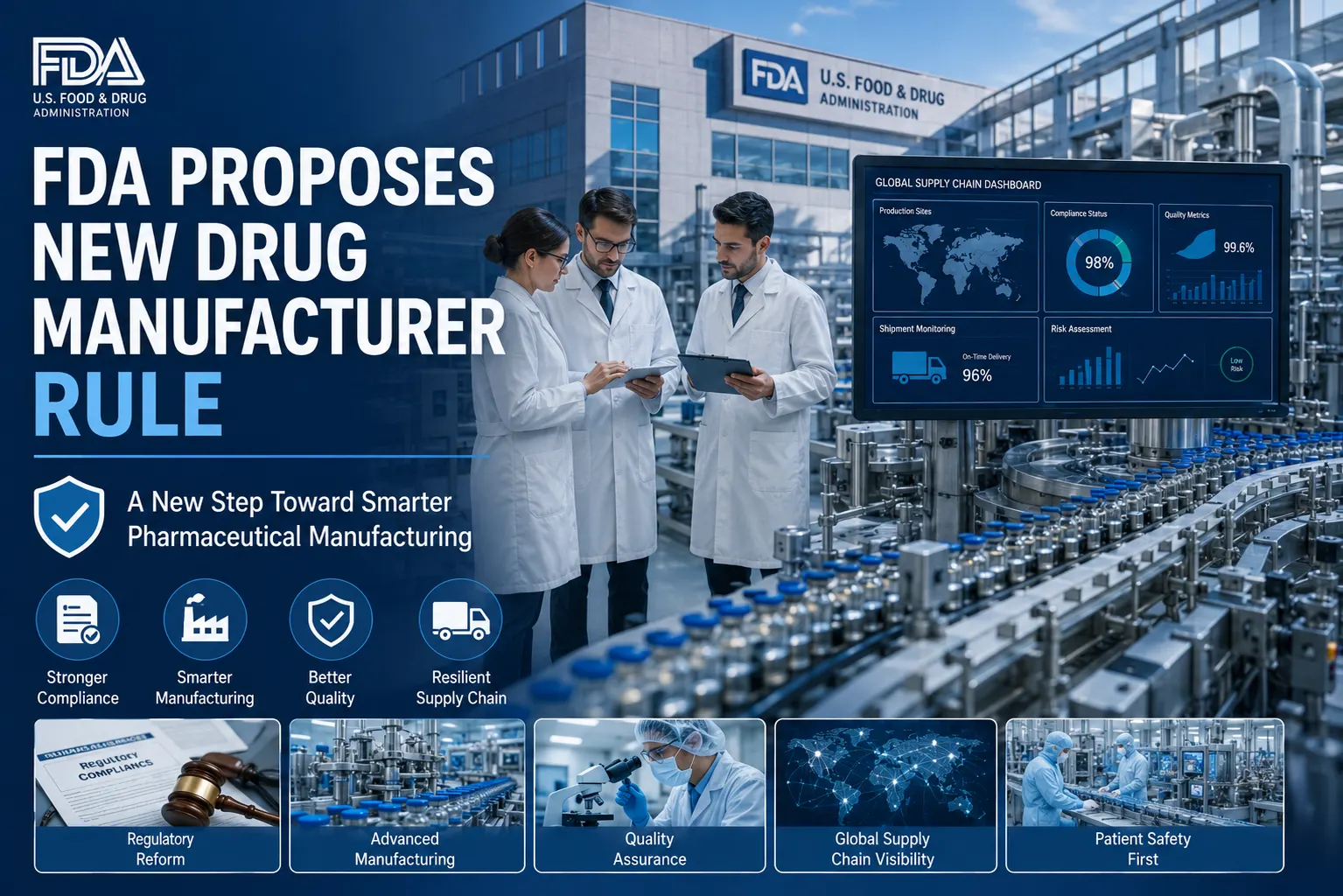
The U.S. Food and Drug Administration (FDA) has proposed a new rule that could simplify registration requirements for certain drug manufacturers operating through centralized manufacturing structures. The proposal is intended to improve regulatory efficiency while strengthening transparency across the pharmaceutical supply chain. If finalized, it could reduce administrative complexity for eligible manufacturers without changing FDA expectations for product quality or safety.
The proposal has attracted attention across the pharmaceutical sector because manufacturing efficiency and regulatory compliance are critical to maintaining reliable medicine supplies. As companies continue investing in advanced production technologies and expanding manufacturing capacity, streamlined regulatory processes could help reduce unnecessary administrative burdens while maintaining patient protection.
Why the FDA Proposed This Change
Modern pharmaceutical companies often operate multiple manufacturing facilities that function under centralized management systems. Existing registration processes may require repetitive administrative work for organizations managing several sites.
According to the FDA, the proposed rule is designed to simplify registration for qualifying manufacturers while improving oversight of manufacturing operations and supply chain transparency. The proposal is part of broader efforts to modernize regulatory systems as pharmaceutical manufacturing becomes increasingly complex.
Potential Benefits for the Pharmaceutical Industry
If adopted, the proposed rule could provide several advantages:
- More efficient registration processes for eligible manufacturers.
- Better visibility across manufacturing networks.
- Improved regulatory consistency.
- Reduced administrative duplication.
- Continued focus on quality management systems.
- Stronger pharmaceutical supply chain oversight.
Importantly, the proposal does not reduce FDA quality standards. Manufacturers would still be expected to comply with Good Manufacturing Practice (GMP) requirements and other applicable regulations.
Impact on Pharmaceutical Manufacturing
The pharmaceutical industry continues to invest heavily in automation, digital manufacturing, data integrity, and supply chain resilience. Regulatory modernization may help companies allocate more resources toward innovation while maintaining compliance.
Companies involved in contract manufacturing, biologics, sterile injectables, active pharmaceutical ingredients (APIs), and specialty medicines may closely monitor future developments if the proposal moves forward.
Career Opportunities
As manufacturing regulations evolve, demand is expected to remain strong for professionals in:
- Quality Assurance (QA)
- Quality Control (QC)
- Regulatory Affairs
- Validation
- Manufacturing Operations
- Process Engineering
- Supply Chain Management
- GMP Compliance
- Documentation
- Data Integrity
Professionals with expertise in FDA regulations, GMP compliance, and pharmaceutical quality systems continue to be highly valued across the industry.
Conclusion
The FDA’s proposed registration rule represents another step toward modernizing pharmaceutical regulation while maintaining public health protections. Although the proposal must go through the regulatory process before becoming final, it reflects the agency’s continuing focus on improving efficiency without compromising safety or product quality.
For pharmaceutical companies, regulatory professionals, and manufacturing organizations, staying informed about these developments will remain important as the U.S. pharmaceutical industry continues to evolve.
Link this article to:
- Leben Life Sciences Hiring Engineering Officer 2026 | Pharma Jobs in Akola (1–4 Years Experience)
- Senior Bioinformatician Job in Pune 2026 | Indus Health Plus Hiring (Genomics & AI Role)
- Sai Life Sciences Walk-In Interview 2026 | Production Jobs in Pharma (2–8 Years) – 11 July
- Best Personal Loan Options in 2026: How to Choose the Right Loan and Save Money
- Ind-Swift Laboratories Walk-In 2026 | QA & QC Jobs (Officer to Executive) – 12 July