
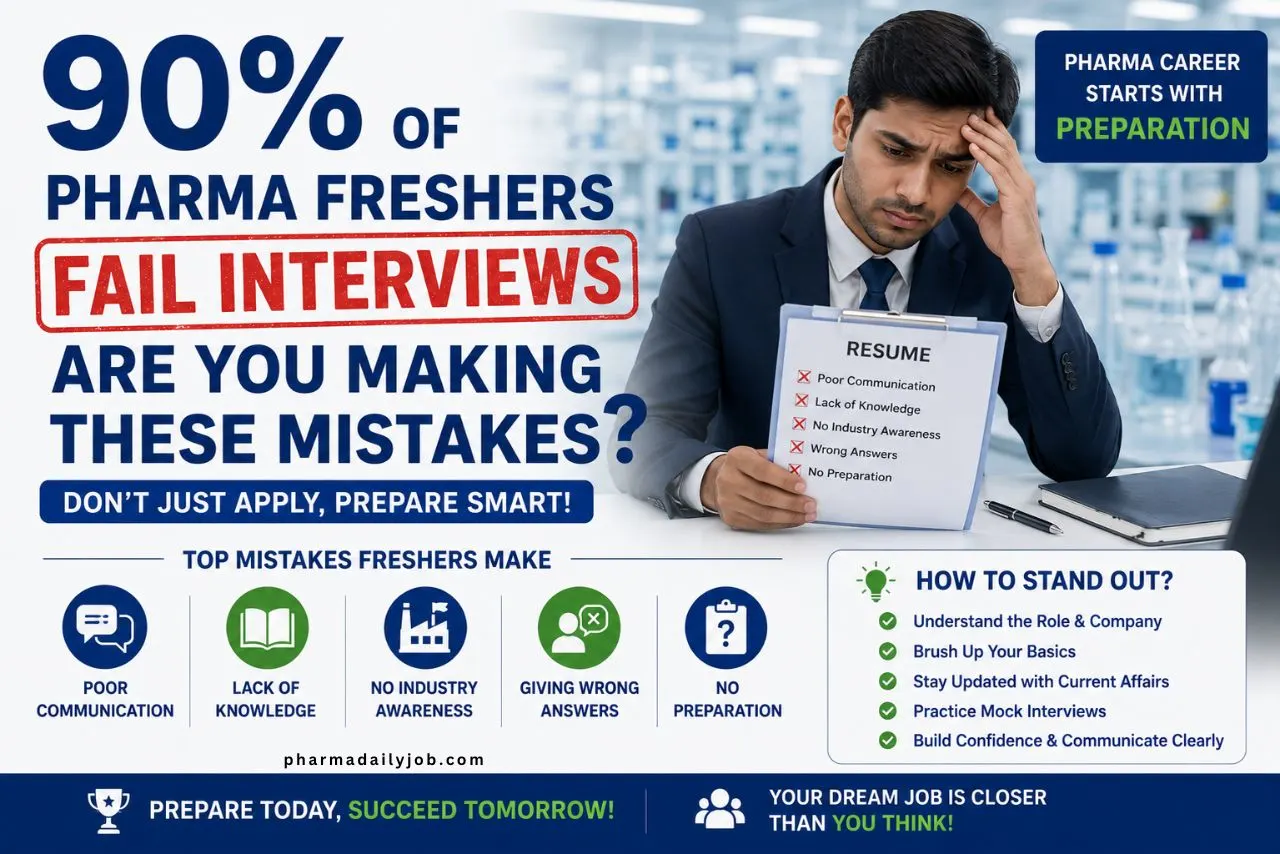
Why 90% of Pharma Freshers Fail Interviews in 2026 (And How to Get Hired Faster)
The pharmaceutical industry continues to offer thousands of job opportunities every year for B.Pharm, M.Pharm, D.Pharm, B.Sc., M.Sc., and Biotechnology graduates. However, despite a growing number of vacancies, many freshers struggle to secure their first job.
Recruiters frequently report that candidates possess academic qualifications but lack the practical knowledge, communication skills, and interview preparation required to succeed in today’s competitive hiring environment.
If you are a pharma fresher preparing for your first interview, understanding these common mistakes can significantly improve your chances of getting selected.
1. Lack of Basic GMP Knowledge
One of the biggest reasons candidates get rejected is insufficient understanding of Good Manufacturing Practices (GMP).
Most pharmaceutical companies expect freshers to have at least basic knowledge of:
- GMP
- cGMP
- SOPs
- Data Integrity
- CAPA
- Deviation
- Change Control
Even entry-level positions often require candidates to understand these concepts.
How to Avoid This Mistake
Review fundamental GMP concepts before attending any interview. Many recruiters begin interviews with simple GMP-related questions to assess your industry readiness.
2. Poor Communication Skills
Technical knowledge alone is not enough.
Many candidates struggle when answering simple questions such as:
- Tell me about yourself.
- Why do you want to join our company?
- What are your career goals?
Interviewers evaluate confidence, clarity, and professionalism throughout the discussion.
How to Improve
Practice speaking in English daily.
Record your answers and listen to them.
Participate in mock interviews with friends or mentors.
3. Not Researching the Company
A surprising number of candidates attend interviews without knowing anything about the company.
Recruiters expect applicants to know:
- Company products
- Manufacturing facilities
- Business areas
- Recent achievements
When candidates fail to answer basic questions about the organization, it signals a lack of interest.
What You Should Do
Spend 10–15 minutes researching the company website before every interview.
4. Weak Resume Preparation
Your resume creates the first impression.
Common mistakes include:
- Spelling errors
- Incorrect formatting
- Unnecessary personal details
- Missing internship information
- Outdated contact details
Resume Tip
Keep your resume concise, professional, and focused on relevant education, projects, internships, and skills.
5. Inability to Explain Industrial Training
Many freshers mention industrial training in their resume but cannot explain what they learned.
Recruiters often ask:
- What was your role during training?
- Which department did you work in?
- What equipment did you observe?
- What SOPs did you learn?
Best Approach
Prepare a short explanation covering:
- Training organization
- Department
- Responsibilities
- Key learnings
6. Lack of Confidence
Confidence plays a major role in hiring decisions.
Candidates often know the answer but become nervous during interviews.
How to Build Confidence
- Practice regularly.
- Attend multiple interviews.
- Improve subject knowledge.
- Prepare common interview questions.
Confidence improves naturally with preparation.
7. Unrealistic Salary Expectations
Freshers sometimes demand salaries that exceed market standards.
Recruiters may view this negatively.
Recommendation
Focus on gaining experience during the first few years of your career.
Skills and expertise usually lead to higher salary growth later.
8. Ignoring Current Industry Trends
The pharmaceutical industry evolves rapidly.
Candidates who stay informed demonstrate genuine interest in the profession.
Stay updated on:
- USFDA inspections
- GMP updates
- Pharmaceutical manufacturing trends
- New drug approvals
- Industry hiring trends
9. Poor Body Language
Interviewers evaluate more than your answers.
Common mistakes include:
- Avoiding eye contact
- Slouching
- Speaking too softly
- Fidgeting excessively
Professional Interview Etiquette
- Sit straight.
- Maintain eye contact.
- Listen carefully.
- Speak clearly and politely.
10. Applying Without the Required Skills
Many candidates apply for every vacancy regardless of eligibility.
This often leads to repeated rejections.
Smart Strategy
Apply for positions that match:
- Educational qualifications
- Internship experience
- Technical skills
- Career goals
Quality applications are more effective than quantity.
Skills Pharma Companies Want in 2026
Recruiters increasingly value candidates with:
- GMP Knowledge
- Data Integrity Awareness
- Documentation Skills
- Communication Skills
- Problem-Solving Ability
- Teamwork
- Analytical Thinking
- Computer Skills
- Adaptability
- Learning Attitude
Developing these skills can improve your employability significantly.
Final Thoughts
Most pharma freshers do not fail interviews because they lack intelligence. Instead, they often underestimate the importance of preparation, communication, and industry knowledge.
By strengthening your GMP understanding, improving communication skills, preparing a professional resume, and researching companies before interviews, you can stand out from other candidates and increase your chances of securing your first pharmaceutical job.
The pharma industry continues to grow, and opportunities are available for candidates who are willing to prepare strategically and continuously improve their skills.
Link this article to:
- o2h Discovery Walk-in Interview 2026 – Research Associate (Prep HPLC/LCMS) Jobs
- Shree Ganesh Chemicals Hiring 2026 – Chemist, Production Manager, Biotech & Marketing Jobs
- Sangharsh Lifecare Hiring 2026 – OSD Production, QA, Warehouse & Packing Jobs in Mehsana
- Aurigene Pharmaceutical Services Walk-in Interview 2026 – Medicinal Chemistry Jobs in Bengaluru
- Mankind Pharma Walk-in Drive 2026 – Production, QA, Validation & Maintenance Jobs in Vadodara
FAQ
What is the most important topic for pharma freshers before an interview?
Basic GMP knowledge, SOPs, Data Integrity, and communication skills are among the most important areas.
Do pharma companies hire freshers without experience?
Yes. Many pharmaceutical companies hire freshers for QA, QC, Production, and Regulatory Affairs positions.
How can I improve my chances of getting selected?
Prepare common interview questions, understand GMP concepts, research the company, and improve communication skills.
Is English mandatory for pharma interviews?
Not always, but basic English communication skills can provide a significant advantage.